Ahead of the forthcoming Gears of War: E-Day release, the Gazette sits down with game composer Adam Lastiwka and illustrator Luke Preece to find out how Gibson instruments have helped craft its soundtrack and celebrate its story through a unique handpainted guitar drop
If there’s one thing that video games and guitars undeniably have in common, it’s that they bring people together. Both are vessels for storytelling and connection, often with complete strangers, and they have a life-affirming way of uniting people across a shared passion and understanding.
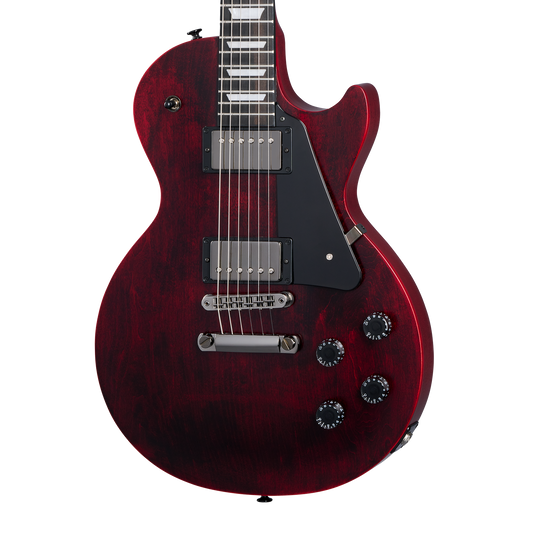
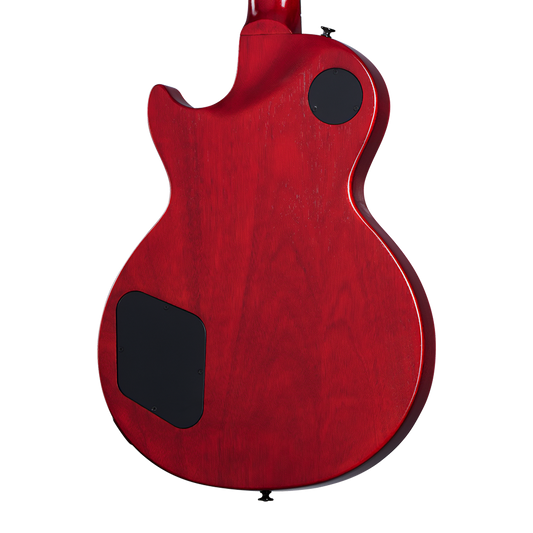
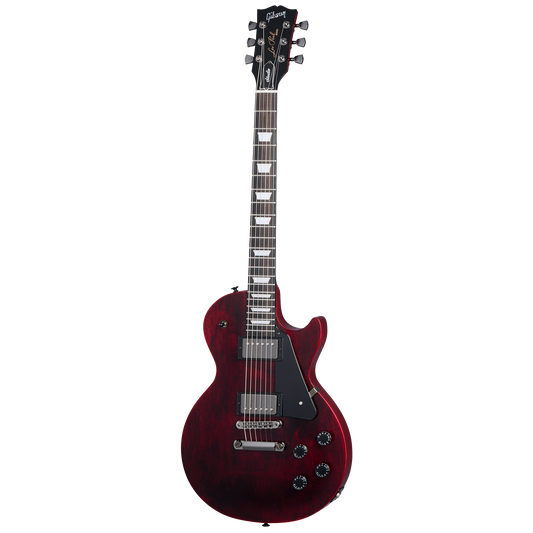
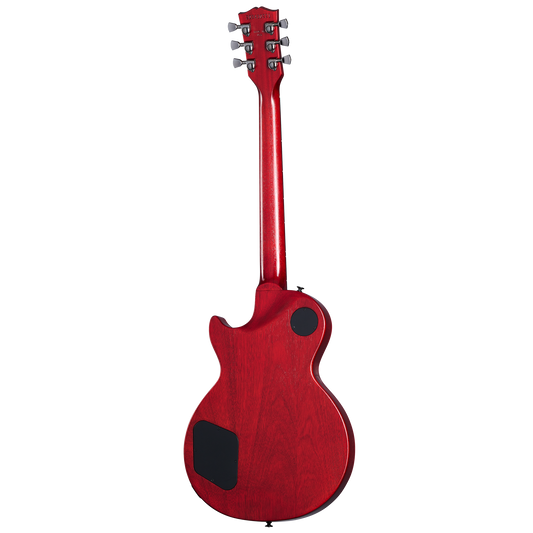
To celebrate the launch of Gears of War: E-Day, releasing October 6, Gibson has teamed up with the franchise for a crossover that unites the characters of Marcus Fenix and Dominic Santiago with two iconic brother-like figures of our own, the Gibson Les Paul™ and the Gibson SG™. To bring it to life, Gibson enlisted the metal and comic-book-inspired stylings of UK-based artist Luke Preece to handpaint four guitars with designs that embody triumph, agony, and brotherhood of the iconic Gears franchise.
Luke, who has also created art for greats like Metallica and Ozzy Osbourne, says these games have had a huge impact on his life and work: “I’ve always been a bit of a geeky gamer guy,” he shares. “I remember playing [the first Gears of War game] because I was working as a graphic designer [on a comic book], and we got sent prizes that we could send out for competitions. We got an XBOX and a copy of Gears of War and ended up playing the game in the office. Never for a second did I think I’d get asked to make art for it.”
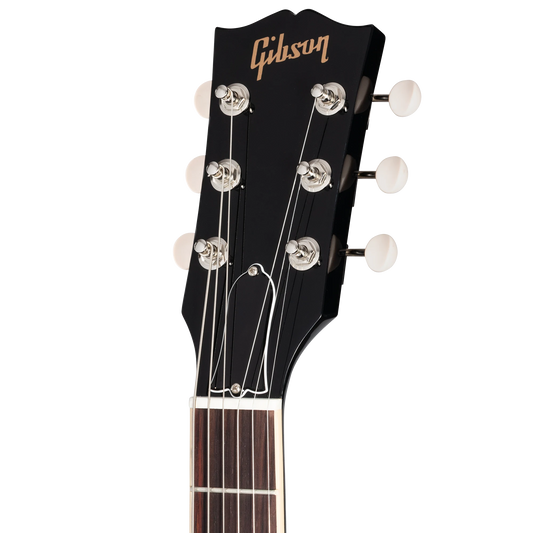
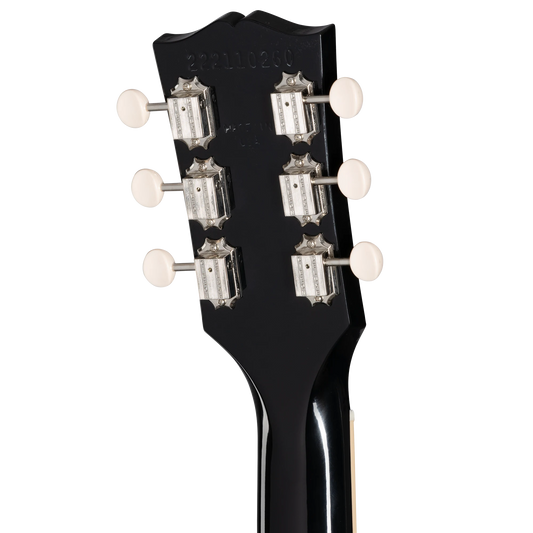
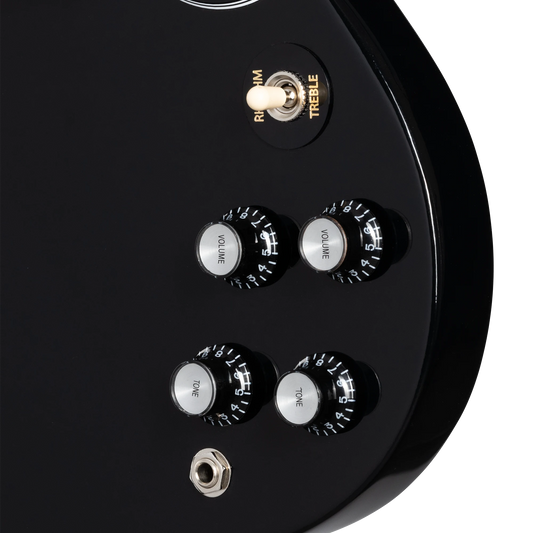
 A closer look at the Luke Preece artwork on the SG Special
Composer Adam Lastiwka has also used a collection of Gibson instruments to craft the vast soundtrack for Gears of War: E-Day. Adam has composed for other Gears of War games in the past and feels it has a pretty special legacy that naturally lends itself to the origins of guitar music: “This story and gameplay experience is mimicking something that was from another time,” he says, “the social binding people had, that primal connection.”
The first Gears of War landed on XBOX 360 on November 7, 2006. The original trilogy follows a conflict between humanity and the Locust Horde, a race of subterranean monsters, on the Earth-like planet of Sera. E-Day acts as a prequel to the stories already forged across the franchise, transporting players back fourteen years before the first Gears of War game to Emergence Day, as Marcus and Dominic are faced with the Locust Horde as they first erupt from below.
“Marcus Fenix’s vibe is very brutal. He’s really stoic yet violent, always driven by the mission. Dom is more tapped into his and Marcus’ emotions, and there’s a sadness that is always underneath his character,” Luke explains. “In the [overall] narrative of [Gears of War: E-Day], he loses his brother, and his brother was Marcus’ best friend. Dom and Marcus come together through the loss.”
 Gears of War character Marcus’ story is implemented on the Les Paul
The soundtrack
Adam took all of this into consideration when it came to the score. He describes his approach to composing as “narrative-driven,” encapsulating the characters’ histories and motivations across the entire lineage of Gears of War, while also using sound in its purest form, like primal sonic triggers.
On E-Day, Adam made use of “the Workhorse,” his 1942 Gibson J-45™ acoustic, to convey softer moments within the game’s story arc, and also to tap into natural settings like forests. Elsewhere, he pushed his guitars beyond their means by using “the wrong strings,” tuning them “to something ridiculous,” and generally experimenting as widely as he could.
“A lot of people think of a guitar, and they think of pop and rock music, and they don’t see it as an instrument that has infinite sonic abilities. You can make an electric guitar fit into any context; it’s one of the most flexible, diverse, capable instruments,” he argues. “The reason I like Gibson guitars is they have this distinct, iconic sound, but when you use them out of that context, they become [a new] voice.”
One of his weapons of choice was a baritone SG, released in 2013 for a short time. Its ability to handle low, growling tunings allowed Adam to tap into the violent aspects of the game within its combat. Elsewhere, he leaned on his beloved Les Paul. “I have a Murphy Lab 1956 Les Paul Goldtop which I love,” he says. “For the real guitar-sounding stuff, that’s the guitar I wanted to use. I could use it without abusing it! I really wanted to get that purity out. I have a lot of Les Pauls, and I love them all… I used an Explorer™ a lot too; those are grossly underappreciated as really, really good guitars.”
You may have already heard some of Adam’s work on E-Day. If you caught the game’s first trailer, you’ll have heard his take on Tears for Fears’ “Mad World,” and you may have already listened to the game’s main theme, “Emergence.” Are these snippets reflective of what else is to come?
“I gotta say no! I have written probably 25 hours of music for this game. I think what people have heard so far is representative of a certain aspect of the game. It’s very somber, very languid. But musically, there are still moments of heroism, moments of sacrifice,” he reveals. “Each level is its own world. You get the overarching sound of the game, but within each environment, you get something that’s purpose-built with its own set of instruments.”
The guitars
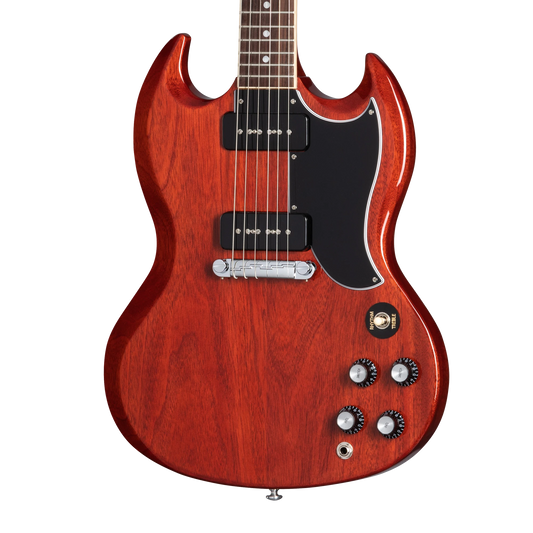
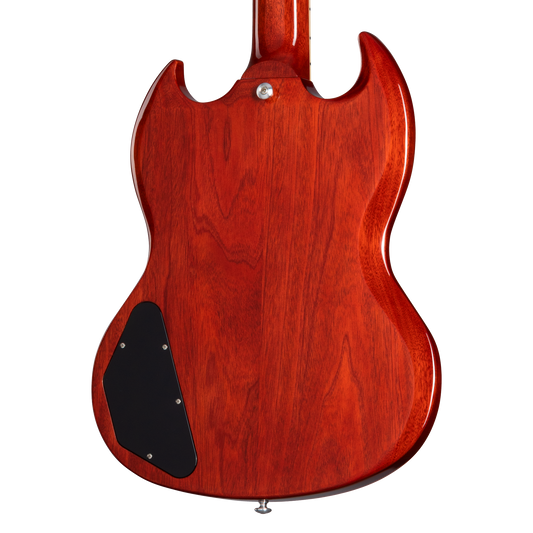
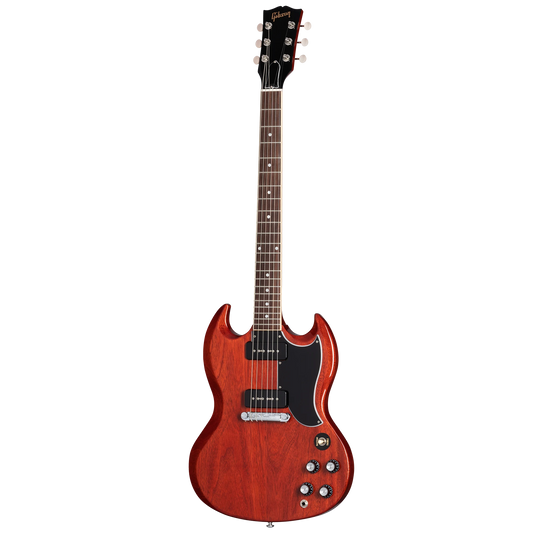
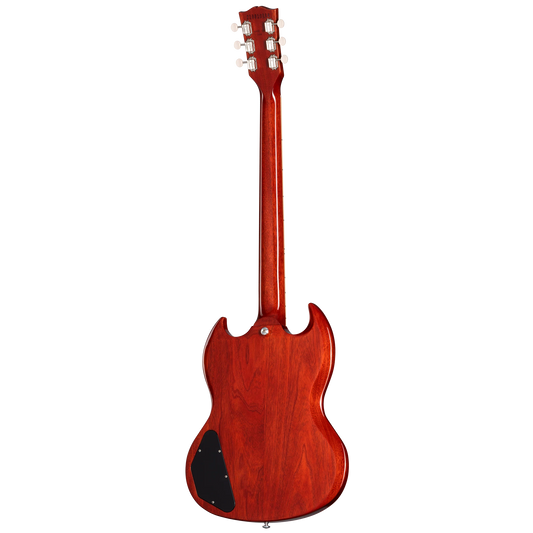
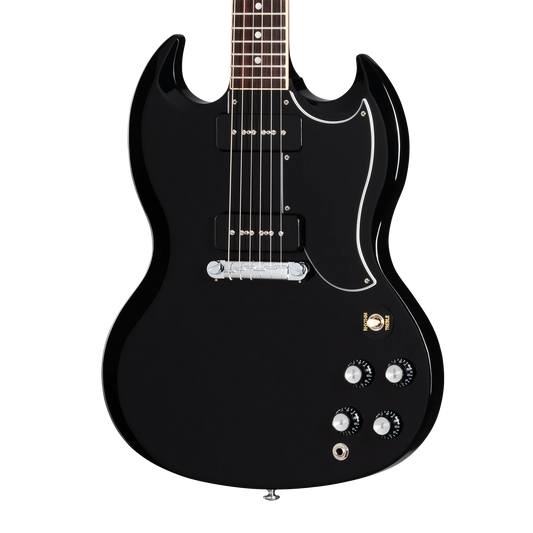
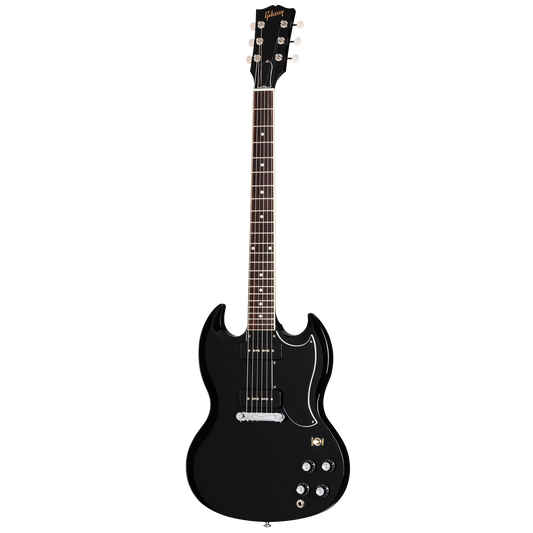
For Luke’s project, his approach involved a combination of many mediums. He initially worked digitally to create the original concepts, which were then used as stencils to transfer the design outlines onto the guitar before the hand-painting process began. He requested that the models—two Les Paul Studios and two SG Special models—arrive without lacquer, so that the paint would sit on them better.
An Ebony finish provided an easy background for the paint and made the colors pop, and all the hardware also had to be stripped out before painting could begin. Luke chose to tap into iconography from the game, like signature weapons and aspects that represent the character’s complex lives and their shared grief.
 For the guitar artwork, Luke Preece tapped into iconography from the game
“With Dom’s design, I decided to have these angel wings with a cog and a skull—tears in the eyes of the skull, with a cog around it—which is very symbolic in Gears. The SG lends itself really well [to the design], because you’ve got those points that the angel wings kind of follow. The wings flow really nicely to the shape.”
Marcus’ story is implemented on the Les Paul, featuring the chainsaw blade of the iconic Lancer weapon, which Luke handily has a real-life replica of in his studio: “Originally, I did a design where it had the gun going across the guitar, but it didn’t fit very well. I came up with the idea of using just the saw blade, so you get the saw teeth [around the] back end of the Les Paul. It almost looks like it’s spinning, and there’s loads of blood splatter coming off it across the guitar. So that taps into the brutal nature of his character and also caters to the guitar.”
Luke hopes that these models will inspire you to pick one up and play, even if you’ve never played guitar before. Both Adam and Luke feel this collaboration represents two things that feel more crucial to our lives than ever: community and music.
“There is this whole brotherhood vibe to everything, like, ‘We’ve got each other’s back,’” says Luke. “I feel like that’s reflected in the guitars as well; the Les Paul and the SG, they’re so iconic, and they’re almost metaphorically brothers, if you will. The same as the characters.”
“I really hope people are excited about it. I see what it means to people,” concludes Adam. “This is people’s culture in a lot of ways; they’ve played this game for 20 years. I took that really seriously. It’s kind of profound.”
Three of the four guitars are available to win—visit Gibson on Instagram to find out how to enter the sweepstakes, closing October 9. Visit the official Gears of War website to find out more.