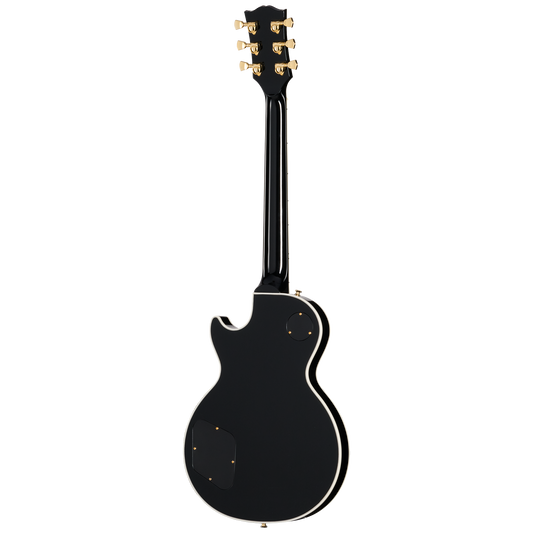
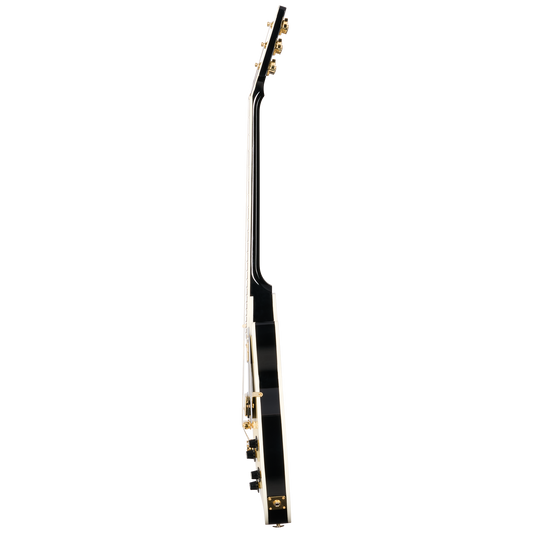
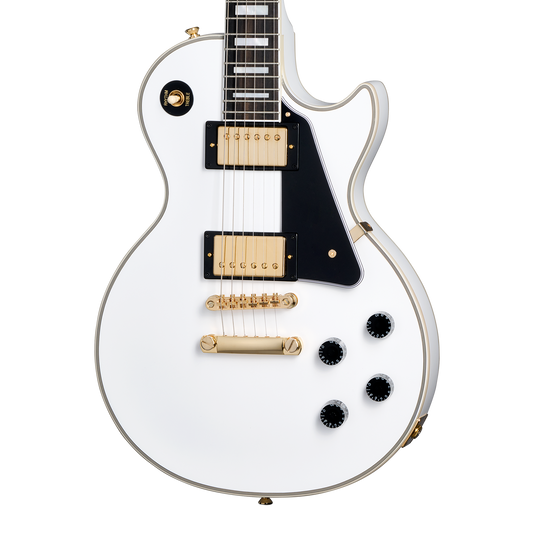
Which Gibson or Epiphone Les Paul Custom is right for you? Read our ultimate Les Paul Custom comparison and buyer’s guide and find the perfect model for your needs
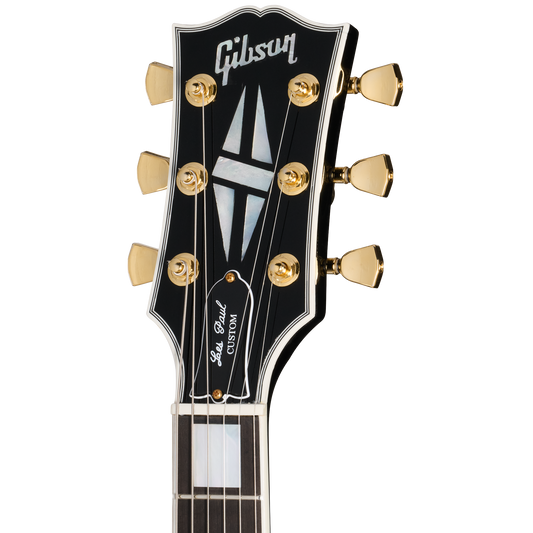
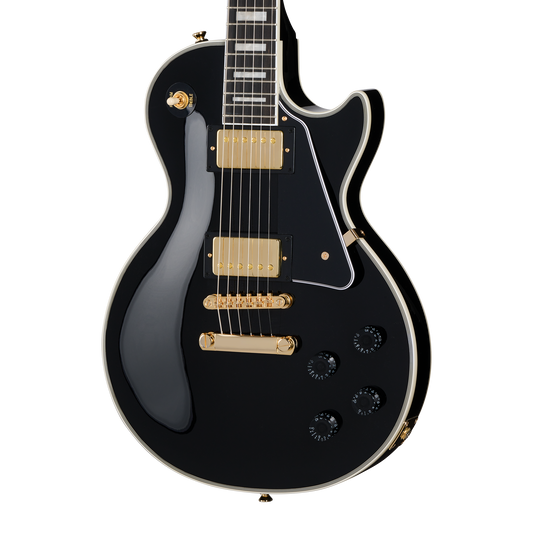
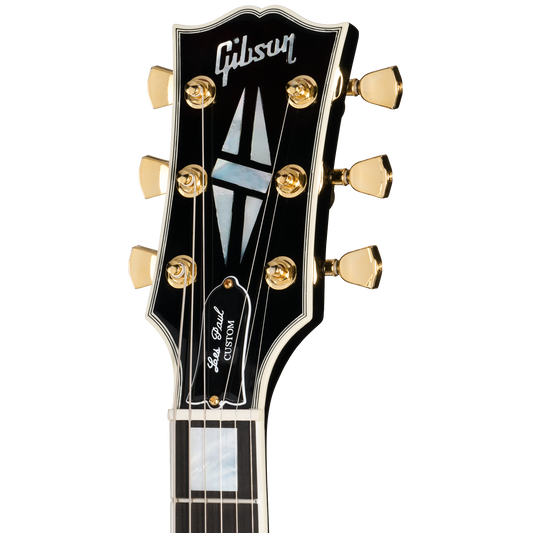
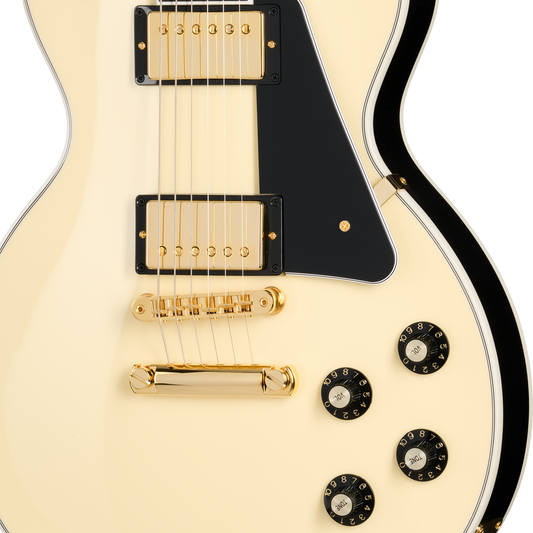
The Gibson Les Paul™ Custom was first introduced in 1954 as a more visually striking alternative to the Les Paul Goldtop, which was introduced in 1952 and, incidentally, was the first Gibson Les Paul guitar. Gibson created the Les Paul Custom at the request of Les Paul himself, who asked for a guitar that “looks like a tuxedo.” The Les Paul Custom typically features an ebony fretboard, multi-ply binding, gold hardware, and a distinctive split-diamond headstock inlay, and over the decades has garnered its own avid fanbase. But the differences between a Les Paul Custom and a Les Paul Standard go way beyond appearance.
From its original all-mahogany construction and early Staple neck pickup to later maple-capped versions with humbuckers™ and modern Gibson and Epiphone interpretations, the Les Paul Custom has developed its own tonal identity thanks to what many players consider to be a brighter tone than a Standard, with additional bite on account of the ebony fretboard. But which Les Paul Custom is right for you?
You’re here because you know you want a Les Paul Custom, but you’re not quite sure which version is the right fit. Maybe you’re weighing up an Epiphone against a Gibson or trying to decide between a 1950s-style all-mahogany reissue and a late 1960s or 70s-style model with a maple top. In this Les Paul Custom buyers guide, I’ll help you decide by outlining a brief history of the Les Paul Custom, explaining how it differs from the Les Paul Standard, and giving you some examples of current models so you can choose the best Les Paul Custom that fits your taste and playing style.
We’ve already compared the differences between the Gibson Les Paul and the Gibson SG™, but if you’re here, the chances are you’ve already decided that the tuxedo-clad flagship of the Les Paul range is the guitar you want. There are many models to choose from, including faithful historic recreations with Staple neck pickups and no weight relief, and modern Gibson Les Paul Customs with 490R and 498T humbucking pickups and lighter, weight-relieved bodies. Whatever your preference, there’s a Les Paul Custom here for you.
A brief history of the Les Paul Custom
In short, the Gibson Les Paul Custom dates back to 1954 as Gibson’s top-of-the- line solidbody electric guitar featuring a carved mahogany top, gold hardware, ebony fingerboard and dual pickups. In 1957, Gibson added humbuckers. In 1961, the model changed to the SG body style and was renamed SG Custom in 1963. Gibson reintroduced the single-cutaway Les Paul Custom in 1968, and it remains in production today. Read on for a deeper dive into the history of the Les Paul Custom, which provides more detail on each period and each model mentioned in this guide.
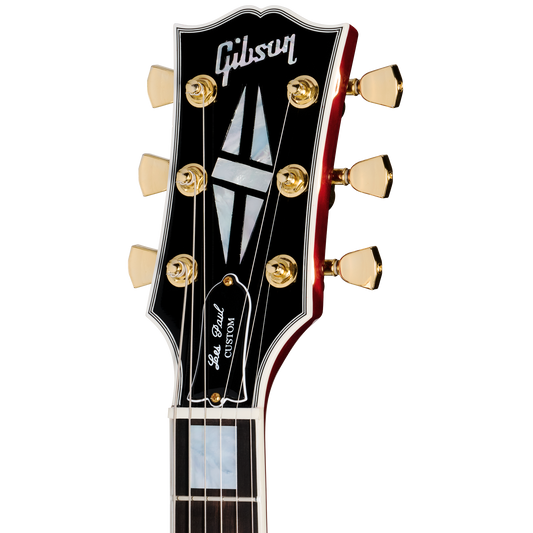
The Les Paul Custom launched in 1954 with an Ebony finish, multi-ply binding, gold hardware, block inlays, and a split-diamond headstock inlay borrowed from the Gibson Super 400. This design gave it a level of prestige unheard of in the relatively new Gibson solidbody line, but it wasn’t just about looks; the sound was really different, too. Les Paul Customs were carved from solid mahogany rather than using a maple top like the Les Paul Goldtop. The first versions used a P-90 at the bridge and an Alnico 5 “Staple” pickup in the neck position, delivering a clear voice with deep low-end that worked well for jazz-influenced players such as Les Paul himself. The low, flat frets earned it the nickname “Fretless Wonder,” which is why the Gibson Les Paul Custom is sometimes referred to by that name.
The sound changed dramatically when Patent Applied For humbuckers were introduced in 1957. The three-pickup Les Paul Custom was by far the most common version of the early humbucker era and gained the nickname, “Black Beauty.” Despite its iconic status today, this single-cutaway model was superseded in 1961 when the Les Paul line shifted to the thinner double-cutaway body style that later became known as the SG. When the single-cutaway version returned in 1968, it came back with a maple top. This major structural change added a further boost in high end, delivering a pronounced bite to the tone—something the new generation of rock lead guitarists found desirable at the time as music began to sound heavier. From then on, most Les Paul Customs would have a maple cap until vintage-correct reissues arrived in the 1990s.
By the mid-1970s, production had moved to Nashville, and features like multi-piece maple necks, volutes, and a three-piece maple top became part of the model’s identity. These days, Gibson offers a wide variety of Les Paul Customs in 1950s, late 1960s, and 1970s flavors alongside artist models and those with more modern specifications. Whether all-mahogany or maple-topped, the Les Paul Custom has always sat slightly apart from the Les Paul Standard—visually more dressed up, tonally a little snappier, and built to look and feel like a top-of-the-range guitar. Below, we examine the major differences between the two most iconic Les Paul models, but first, we discover which artists helped make the Les Paul Custom famous.

Who plays a Gibson Les Paul Custom?
Beginning, of course, with Les Paul himself, there are thousands of artists who have used the Gibson Les Paul Custom as a go-to guitar. Some have made it their signature sound, while others have used it for specific tones for certain tracks on the road or in the studio. Some artists, like Steve Jones of the Sex Pistols or Randy Rhoads, are so synonymous with the Les Paul Custom that it’s hard to imagine their music without it.
From psychedelic rock and electric blues to punk, alternative, glam rock, progressive metal, indie-rock, and beyond, the Gibson Les Paul Custom has been loved, used, and (ab)used by some of the most influential guitarists in every genre. Other notable artists who have played the Gibson Les Paul Custom include Eric Clapton, Keith Richards, Jimmy Page, Jimi Hendrix, Mick Ronson, Mick Jones of The Clash, James Iha from Smashing Pumpkins, Adam Jones of Tool, Jerry Cantrell from Alice in Chains, Kirk Hammett of Metallica, Paul Banks from Interpol, and many more. When you pick up a Les Paul Custom, you’re in good company.
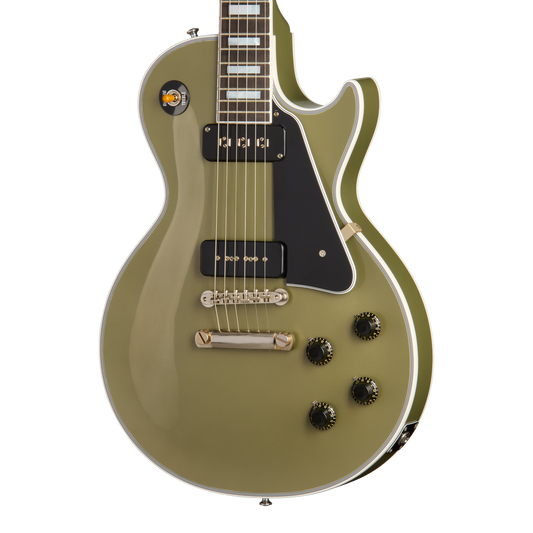
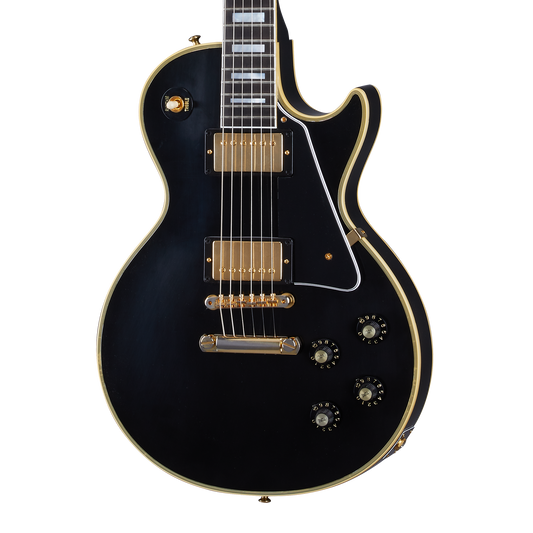
 L-R: Gibson Custom Les Paul Custom compared to a Gibson Les Paul Standard 50s
What are the differences between the Les Paul Custom and the Les Paul Standard?
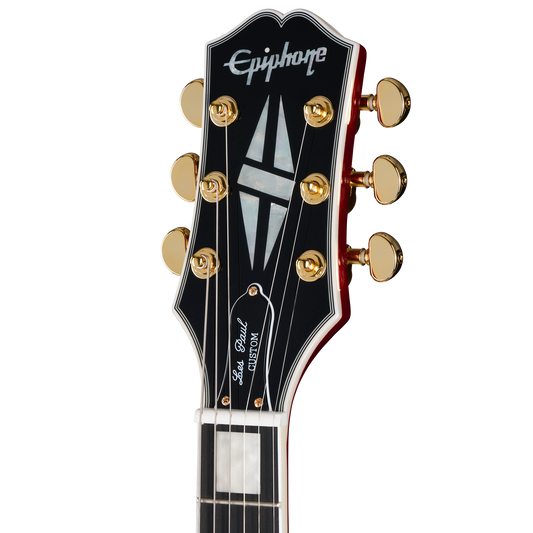
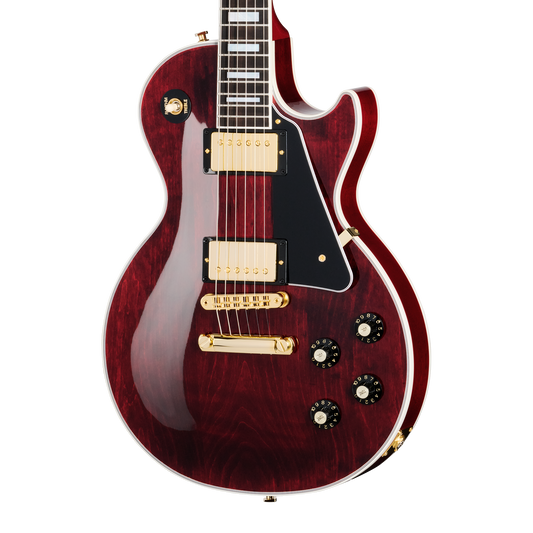
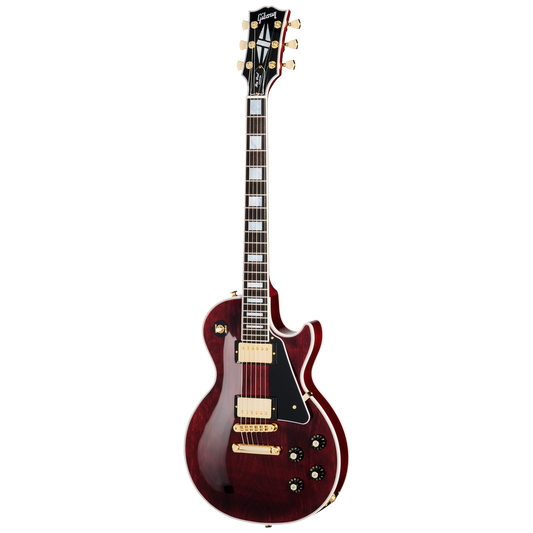
The main differences between the Les Paul Custom and the Les Paul Standard are usually the tonewoods used in neck, body, and top construction, and cosmetic appointments (including the headstock and binding style). The Les Paul Custom is still every inch a Les Paul, but the differences between the two models make a real impact on tone. The Custom usually features an ebony fretboard, multi-ply binding, gold hardware, and a split diamond logo on a slightly enlarged headstock.
Whichever flavour of Les Paul Custom you opt for, the main factor that makes a difference sonically when compared to the Standard is the ebony fretboard. 50s-style Les Paul Customs feature a solid mahogany body, while the late 60s and 70s-style guitars will usually have a mahogany body with a maple top. With the all-mahogany body style, you get a little more warmth and slightly more sustain, but with the maple cap, you typically get a brighter attack that gives lead parts a little more bite.
The Les Paul Standard typically features a mahogany body with a maple cap, a rosewood fretboard—warmer and less snappy than ebony— a standard headstock with the Les Paul logo, and vintage-style Burstbucker pickups that deliver that classic Les Paul tone. At a glance, the Les Paul Custom and Les Paul Standard share the same core design: a single-cutaway body, set neck, dual humbuckers, and a 24.75-inch scale length, but when you play both side-by-side, you can feel and hear the contrast pretty quickly. Let’s break down the differences in more detail.
Construction and body design
The earliest Les Paul Customs from the 1950s featured a carved all-mahogany body rather than the maple-capped bodies seen on the Les Paul Goldtops of the era. Although the sonic differences are subtle, compared to Les Paul Custom model with a maple cap, earlier iterations and reissues in that style tend to have a somewhat smoother, darker sound with a slightly bolder midrange. When the single-cutaway Les Paul Custom made a comeback in 1968, it traded all-mahogany construction for a maple top glued to a mahogany back. It shares this body recipe with the Les Paul Standard, and it typically delivers more attack and clarity. The 1970s saw further changes, such as multi-piece maple tops and maple necks with volutes, and eventually pancake body construction, which tended to produced a brighter sound and a different feel from those original all-mahogany Les Pauls from the 50s.
Fingerboard and binding
The Les Paul Custom typically features an ebony fingerboard, which provides a sharper, clearer attack than rosewood. It’s also often described as a smoother playing experience. The Les Paul Standard uses rosewood, which is slightly warmer sonically. When you look at the Les Paul Custom, your eyes are instantly drawn to the multi-ply binding on the body and headstock, and the headstock’s split diamond inlay. The Les Paul Custom also has block fingerboard inlays and gold hardware, while the Les Paul Standard has simpler binding, trapezoid inlays and nickel hardware, keeping things classy but a little more understated. Those are the main aesthetic differences.
Pickups, electronics, and tone
Ultimately, all Les Pauls share a common DNA and a sonic family resemblance. All things being equal, an ebony fingerboard will deliver a snappier attack than rosewood, which tends to give Les Paul Customs of all types a different flavor in comparison to a Les Paul Standard with traditional appointments. While the Les Paul Standard’s earlier Goldtop incarnations came with twin P-90s, the Custom began life with a Staple pickup in the neck position, which was a favorite of Les Paul himself and offered deeper bass and extended treble for a very hifi neck-position sound.
Once the humbucker era arrived in 1957, the Les Paul Custom and Standard were outfitted with the same Patent Applied For pickups, although the Custom was most commonly offered in a three-pickup configuration, offering a slightly different array of tones. From the 1970s through to the 1990s, Les Paul Standard and Custom models were often equipped with the regular Gibson humbuckers of the day, but today’s catalog offers myriad variations, from Modern Collection Les Paul Customs with more aggression thanks to 490R and 498T pickups, to Gibson Custom vintage reissues with Custombuckers. Next, let’s take a look at the various different types of Gibson and Epiphone Les Paul Custom available today.

Epiphone Les Paul Custom
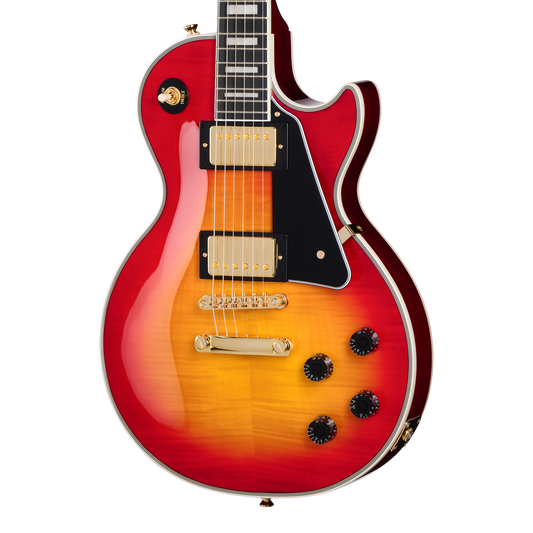
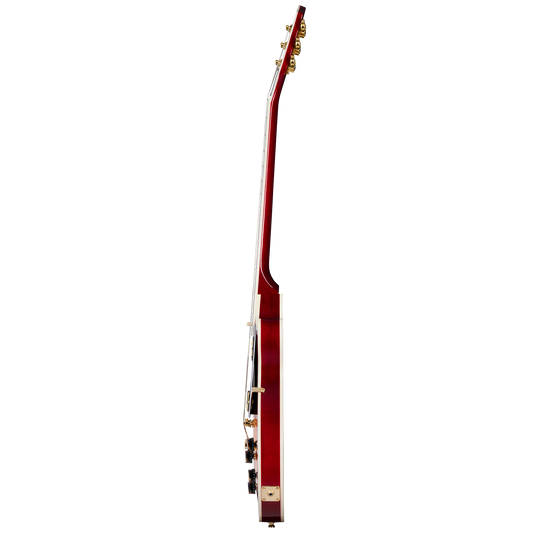
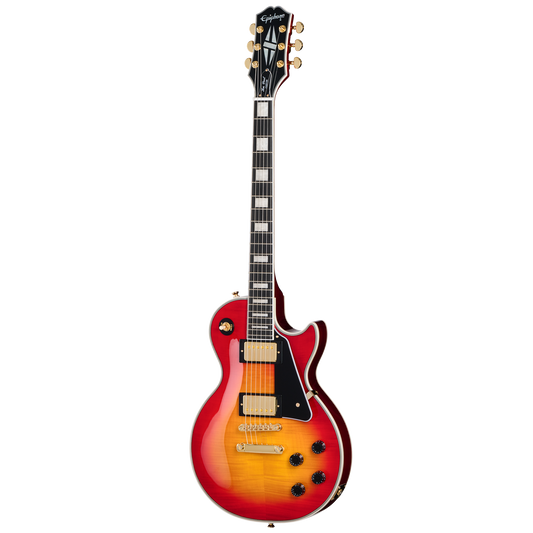
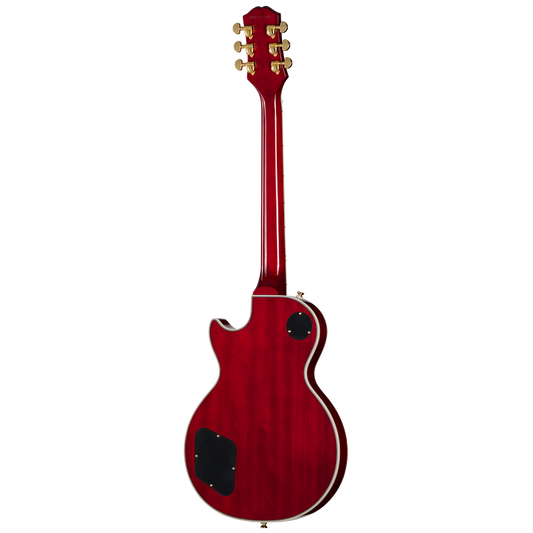
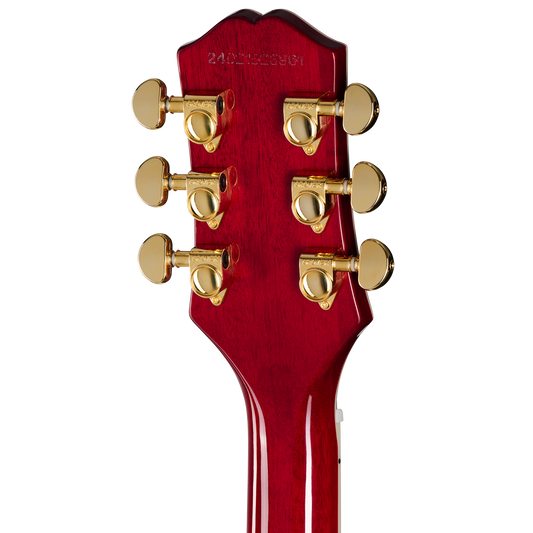
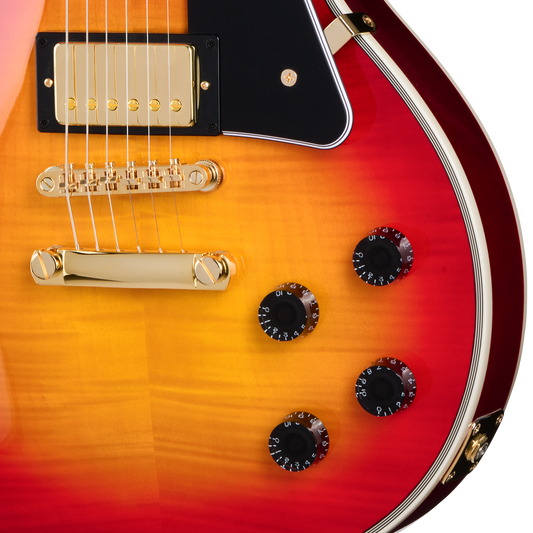
First up in our Les Paul Custom buyer’s guide is the Epiphone Inspired by Gibson Les Paul Custom. The Epiphone Les Paul Custom brings tuxedo styling and makes it more accessible for every player. Part of the Inspired by Gibson Collection, it captures the qualities you want in a Les Paul Custom, such as multi-ply binding, gold hardware, and block inlays.
This model features an all-mahogany body, paired with a mahogany neck shaped with a Modern Medium C profile. An ebony fretboard with pearloid block inlays maintains the Custom’s traditional look, while medium jumbo frets offer a contemporary playing feel. A pair of Epiphone ProBucker Custom humbuckers, voiced with inspiration from Gibson Custom’s Custombucker pickups, provides a balanced output with clear mids and smooth high-end response.
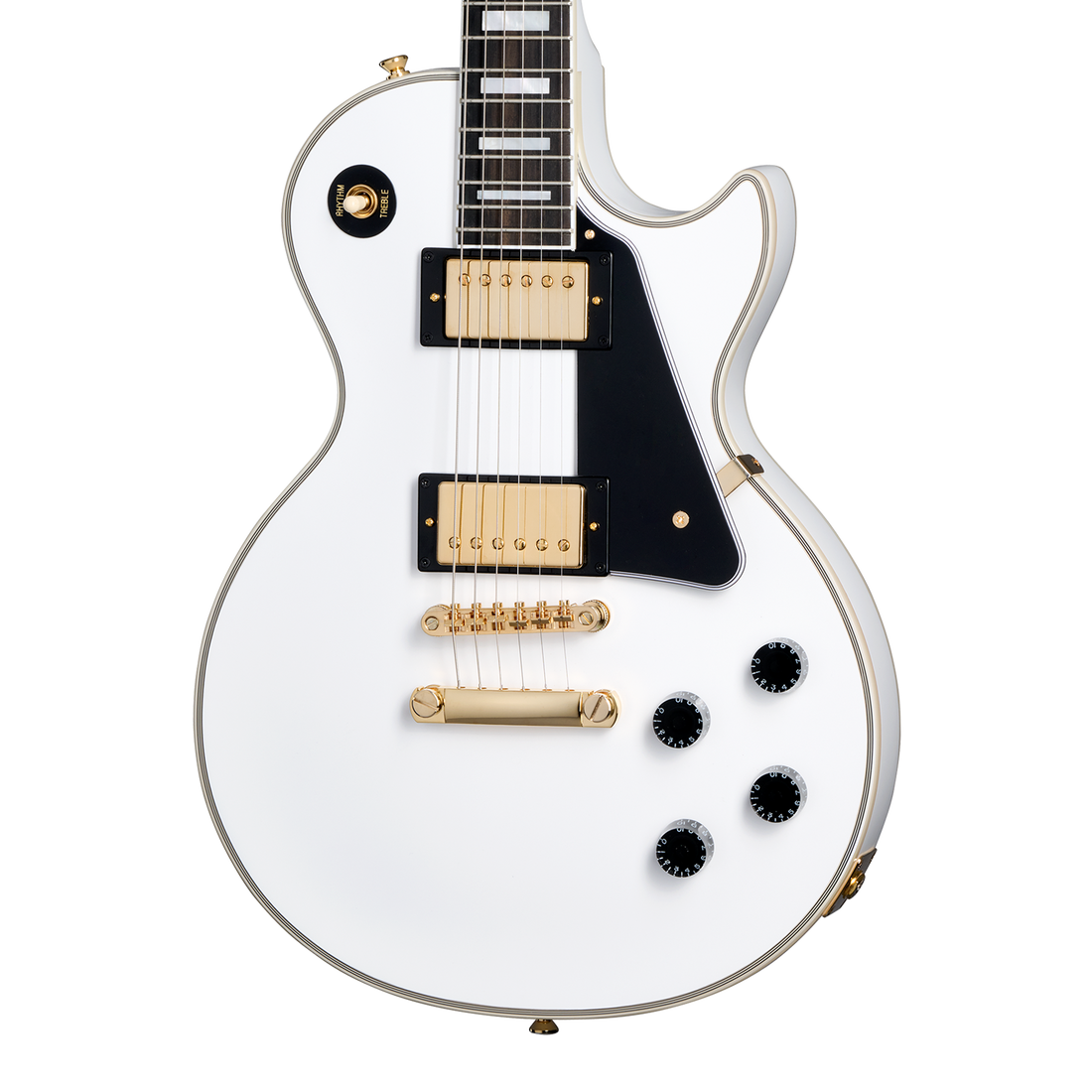
Epiphone IGC Les Paul Custom
The Epiphone Inspired by Gibson Custom Les Paul Custom is the most historically accurate Epiphone interpretation of the Gibson Les Paul Custom at a more accessible price point. Developed in collaboration with Gibson Custom in Nashville, it comes equipped with Gibson USA 490R and 498T pickups and period-correct construction details. This version of the Les Paul Custom features a solid mahogany body topped with a maple cap, adding a touch of upper-midrange clarity and definition. The one-piece mahogany neck features a Modern Medium C profile and an ebony fretboard with mother-of-pearl block inlays, which feels great under the fingers, and looks cool too.
One of the biggest differences between this and the Inspired by Gibson version lies in the pickups. This model includes a pair of Gibson USA 490R and 498T humbuckers that deliver strong midrange presence and articulate top end, wired by hand to CTS® potentiometers and Mallory™ capacitors. This thing is made for serious players who want total tonal control.

Gibson Les Paul Custom 70s
The Gibson Les Paul Custom 70s sees the Les Paul Custom return to the Gibson USA lineup, featuring specifications inspired by the Nashville-built 1970s-era iteration. While the earliest Les Paul Customs were all-mahogany instruments, the late-60s return introduced maple tops, and the 70s evolved that formula further, adding a maple neck with a slimmer 1970s profile for player comfort and a volute for strength.
The bound ebony fretboard has mother-of-pearl block inlays and a pair of Calibrated T-Type humbuckers hand-wired to Orange Drop® capacitors, delivering articulate highs, defined lows, and balanced output, making this guitar excellent for a wide variety of genres.

Gibson Custom Les Paul Custom
Built by the skilled artisans at the Gibson Custom Shop in Nashville, Tennessee, the Gibson Custom Les Paul Custom is the modern flagship interpretation of the model. Of course, it has that defining tuxedo look with multi-ply binding, gold hardware, ebony fretboard, and split-diamond headstock inlay, but it also provides updates to the Les Paul Custom platform to suit the modern player, with weight relief (no small thing when you consider that vintage-style Les Paul Customs are typically rather substantial instruments) and modern-voiced pickups.
It has a one-piece mahogany back paired with a maple top, providing a classic blend of clarity and upper-midrange presence, while a long neck tenon enhances sustain and resonance. The solid mahogany neck is shaped to a Modern Medium C profile and capped with an ebony fretboard with mother-of-pearl block inlays. The combination of the body construction with a matched 490R and 498T humbucker set provides focused mids and strong bridge-pickup output, giving you a super-articulate voice that sounds great when played either clean or with overdrive or distortion via pedals, a cranked amplifier, or your favorite amp modeler.

Gibson Custom 1954 Les Paul Custom Staple Pickup Reissue VOS
The Gibson Custom 1954 Les Paul Custom Staple Pickup Reissue VOS is a faithful recreation of the original Les Paul Custom model. Unlike later versions that added a maple top, this one uses a single solid piece of mahogany, yielding a smoother, warmer sound with full-bodied midrange and increased sustain.
The 50s Chunky D-shape neck profile feels substantial in your hand yet remains comfortable, enhancing overall resonance. However, it’s the pickups that really set this model apart. The Custom Staple pickup in the neck position offers the bite and clarity of a single coil, but with much greater depth. Meanwhile, the Soapbar in the bridge position delivers classic P-90 punch and grind in abundance. If you want the sound, look, and playability of the OG Les Paul Custom from the vintage era, this is the guitar for you.

Gibson Custom 1957 Les Paul Custom Reissue VOS
The Gibson Custom 1957 Les Paul Custom Reissue VOS represents one of the most iconic iterations of the model that became known as the “Black Beauty.” Built with a single-piece solid mahogany body, it delivers no shortage of depth but still has articulation and snap thanks to an ebony fretboard.
This model comes in three distinct flavors: hardtail versions with two or three Custombucker Alnico 3 pickups , and a further three-pickup option available with a Bigsby® vibrato. Crafted by the skilled artisans at the Gibson Custom Shop in Nashville, Tennessee, this faithful reissue is a recreation of the much-loved 1957 original, capturing the look, feel, and tone of the first humbucker-equipped Gibson Les Paul Custom.

Gibson Custom 1968 Les Paul Custom Reissue
The Gibson Custom 1968 Les Paul Custom Reissue captures the pivotal moment when the single-cutaway model returned after its hiatus from 1961 to 1968. Unlike the all-mahogany 1950s versions, the 1968 design introduced a maple top on a mahogany back, adding further attack and upper-midrange definition. It also standardized the two-humbucker layout, offering more right-hand picking space than the earlier three-pickup Customs.
Here, you get a pair of ’68 Custom humbuckers, hand-wired to CTS pots and aptly-chosen Black Beauty capacitors, delivering articulate highs, tight lows, and balanced output. The result is a focused, highly articulate sound with plenty of classic rock character, responding well to a good fuzz pedal or a tube amp cranked to the max.
What about artist signature Les Paul Customs?
Over the years, Gibson and the Gibson Custom Shop have produced many signature Les Paul Custom models in collaboration with iconic guitarists. Two such current options are the Gibson Custom Eric Clapton 1958 Les Paul Custom and the Gibson Custom Mick Ronson 1968 Les Paul Custom. Read on to find out more.
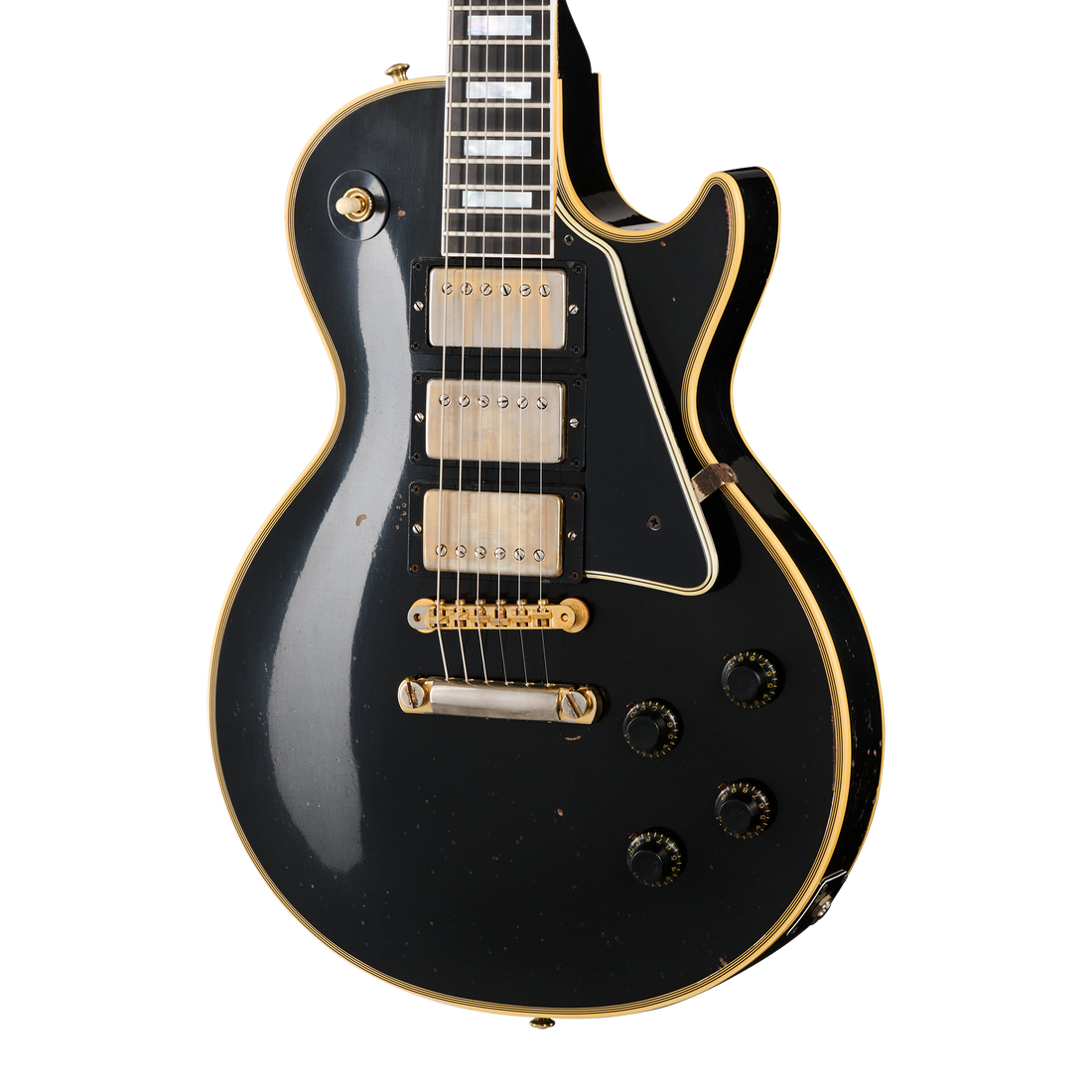
Gibson Custom Eric Clapton 1958 Les Paul Custom
The Gibson Custom Eric Clapton 1958 Les Paul Custom pays tribute to the three-pickup Custom Clapton used during Cream’s first American tour and on Disraeli Gears, and later gifted to Albert Lee. Like the original instrument, this model features a one-piece, all-mahogany body rather than a maple-capped design, delivering the full midrange foundation and smooth high-end response that defined late-50s Les Paul Customs. You might even say it has a creamy tone.
A mahogany neck carved to match the profile of Clapton’s original is joined to the body with a long tenon and is topped with an ebony fretboard and mother-of-pearl block inlays. The three unpotted Custombucker pickups are wired with CTS 500k audio-taper potentiometers and paper-in-oil capacitors for dynamic, open response. The middle pickup is mounted with its screws oriented toward the neck, mirroring the original guitar. Aged gold hardware and Murphy Lab detailing complete a historically faithful recreation built by the artisans of the Gibson Custom Shop in Nashville, Tennessee.

Gibson Custom Mick Ronson 1968 Les Paul Custom Collector’s Edition
The Gibson Custom Mick Ronson 1968 Les Paul Custom Collector’s Edition is a tribute to the iconic stripped Les Paul Custom that Mick Ronson used to define the sound of glam rock in the early 1970s. It features a one-piece mahogany body with a plain maple cap, paired with a solid mahogany neck carved to an Authentic ’68 Medium C profile and topped with an ebony fretboard with mother-of-pearl block inlays.
The guitar is equipped with two unpotted ’68 Custom humbuckers with Alnico 2 magnets, delivering the aggressive, open character associated with Ronson’s original guitar. Just add a towering amplifier stack and a cocked wah-wah. Signature details include aged gold hardware, mismatched reflector knobs, and multi-ply binding on the top, back, and headstock, faithfully recreating the distinctive aesthetic of Mick Ronson’s Bowie-era 1968 Les Paul Custom.
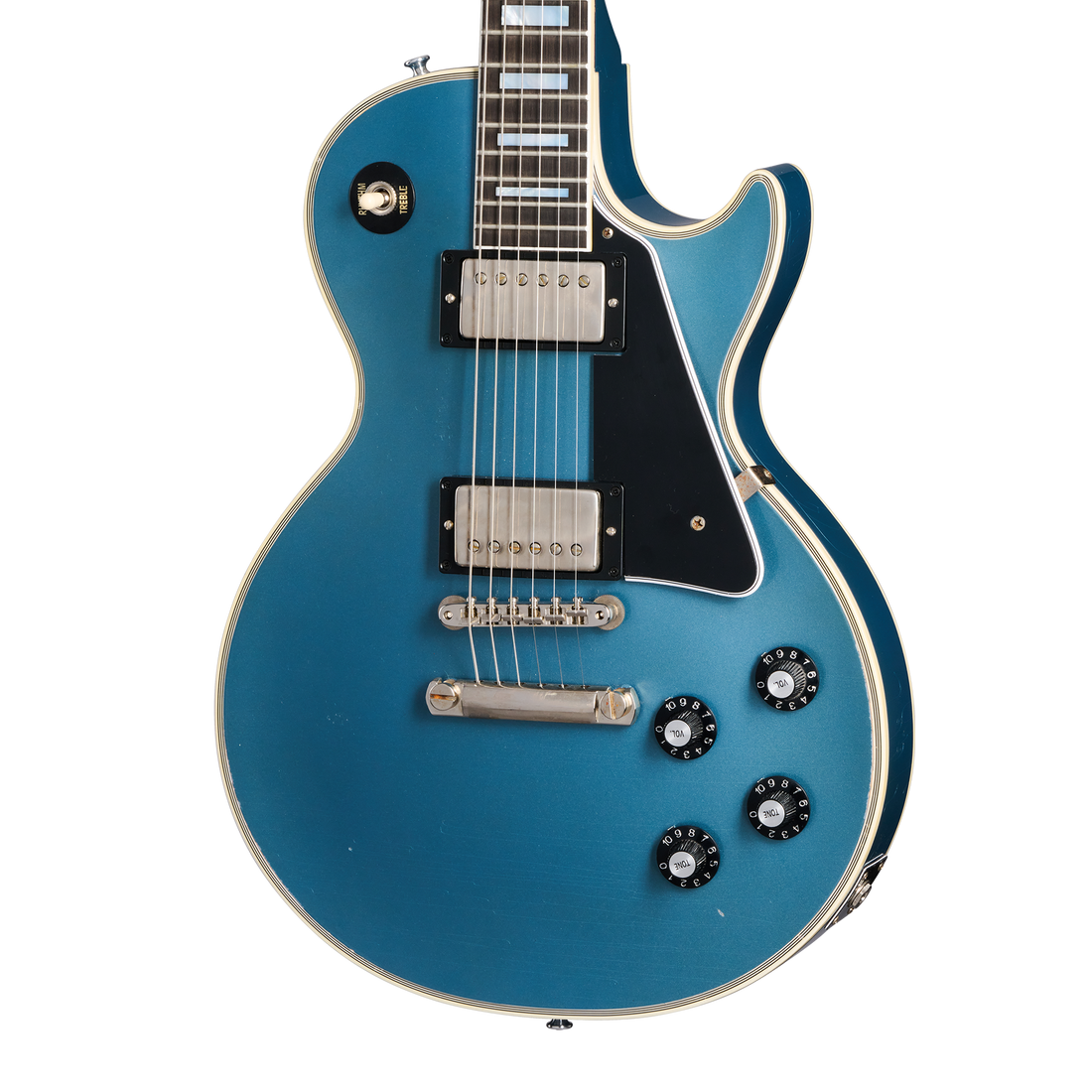
Gibson Custom Murphy Lab Collection
Gibson Custom guitars with Murphy Lab aging are meticulously hand-aged at the Gibson Custom Shop in Nashville, Tennessee, and feature historically accurate construction paired with aging treatments that replicate authentic vintage playwear. Aging levels range from Ultra Light Aged through Ultra Heavy Aged, and include lacquer checking, hardware patina with every part aged by hand, and playing wear authentically recreated.
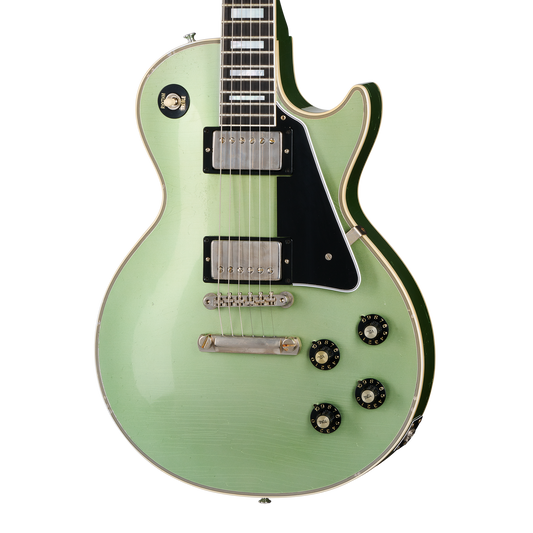
These guitars are handcrafted using period-correct woods, pickups, and wiring, while delivering the look and feel of a well-played original thanks to proprietary Murphy Lab lacquer. A standout model available now is the Gibson Custom 1968 Les Paul Custom Reissue, Ultra Light Aged. The Murphy Lab Ultra Light Aged finish treatment gives it the unique character, vibe, and feel of an original example from the first Gibson Golden Era.
Which Les Paul Custom is right for you?
After reading this buyer’s guide, if you’re still asking yourself, “Which Les Paul Custom should I buy?” the answer really comes down to which Les Paul Custom era you connect with the most and find most inspiring. It’s also down to your preferred tone and neck shape preferences. If you want the classic tuxedo aesthetic and humbucker tones in a streamlined format, the Epiphone Les Paul Custom delivers the essentials and comes with Gibson DNA intact. If you’re looking for upgraded electronics and closer alignment with historic specifications, the Epiphone Inspired by Gibson Custom Les Paul Custom takes that a step further.
If 1970s bite and a Nashville-era feel are more your speed, the Gibson Les Paul Custom 70s is the logical choice. For historically precise recreations from the 1950s and 60s, Gibson Custom Historic models offer distinct chapters in the Les Paul Custom story, which you might prefer. And if you’re drawn to guitars played by your favorite artists, you have options like the Eric Clapton and Mick Ronson models.
Want a really unique interpretations of the Les Paul Custom? Make sure you check out the latest Gibson Custom Select and Mod Collection models for unique twists on the classic Les Paul Custom theme. And if you have a very specific idea in mind, the Gibson Custom Made to Measure program will build the custom guitar of your dreams.