Watch the latest video from the Gibson Gear Guide to discover how wood selection, tonewood combinations, and hands-on craftsmanship influence the sound and playability of Gibson electric guitars
Every Gibson electric guitar is handcrafted in Nashville, Tennessee. Hit the play button above to check out the latest video from the Gibson Gear Guide, in which host Dinesh Lekhraj goes behind the scenes at the Gibson and Gibson Custom craftories in Music City to find out what “handcrafted” really means and to explore where the story of a Gibson electric guitar really begins: with the wood it is crafted from.
Along the way, we meet Gibson Master Luthier Jim DeCola, and Gibson Custom Made to Measure Director Dustin Wainscott. They explain why mahogany, maple, rosewood, ebony, and korina have become fundamental to Gibson electric guitar construction, why a Les Paul™ sounds different from an SG™, how fretboard material impacts tone, and how overall weight and weight relief influence the guitars players gravitate towards.
A brief history of Gibson electric guitar tonewoods
The story begins with arguably the most important material in Gibson history: mahogany. Jim explains why this tonewood became one of the most iconic ingredients in the Gibson guitar recipe, and particularly in the case of the Gibson Les Paul. “If you go back in time, we were founded in Kalamazoo, not far from Detroit,” he tells Dinesh. “Detroit, being an automotive center, used a lot of mahogany, and well-to-do people would have furniture made out of mahogany. Even though it wasn’t indigenous to that area, they used an awful lot of it.”
Jim believes that ready availability may have played a part in Orville Gibson’s early use of the material, but its musical qualities ensured it stuck around. “It just proved itself to be a great-sounding tonewood,” he says. That relationship between materials and instrument design would become particularly important as Gibson moved into solidbody electric guitars and began combining woods to create distinct voices that players today still gravitate towards.
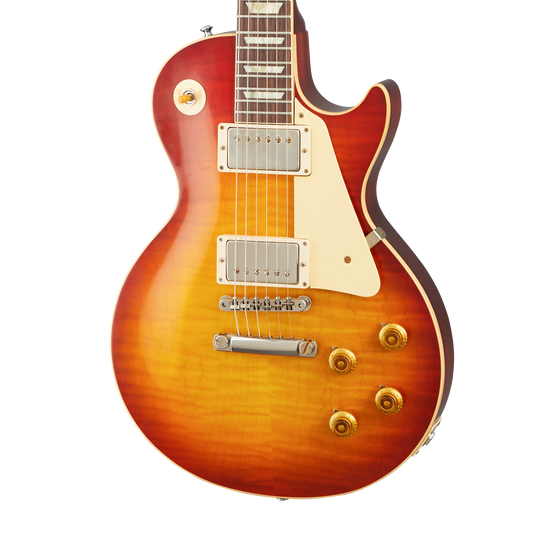
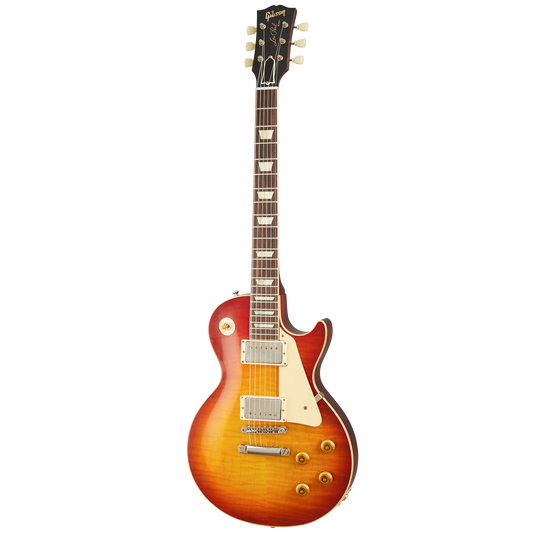
 Maple and mahogany combine to create the signature tone of the Gibson Les Paul Standard
What makes Gibson electric guitars so special?
For Jim DeCola, one of the defining characteristics of a Gibson electric guitar and what makes Gibson guitars so special is the amount of skilled handwork that goes into the building process. “Even though we’re the largest factory within Gibson, there’s still a ton of handwork that goes into our guitars,” he explains. “A guitar, by nature, being crafted of wood, really can’t be put into machines and come out as a finished product. It has to be crafted by people, and that’s what makes our guitars so special.”
Of course, modern machinery and automations can achieve precise dimensions and perform the initial shaping, but wood is an organic material that needs a hands-on approach, meaning skilled craftspeople continue to assess, fit, shape, and refine individual components as your Gibson guitar goes through production. This includes the neck fit, during which a craftsperson carefully shapes it by hand with a chisel until the fit is perfectly matched to the body.
Why does a Gibson SG sound different to a Les Paul?
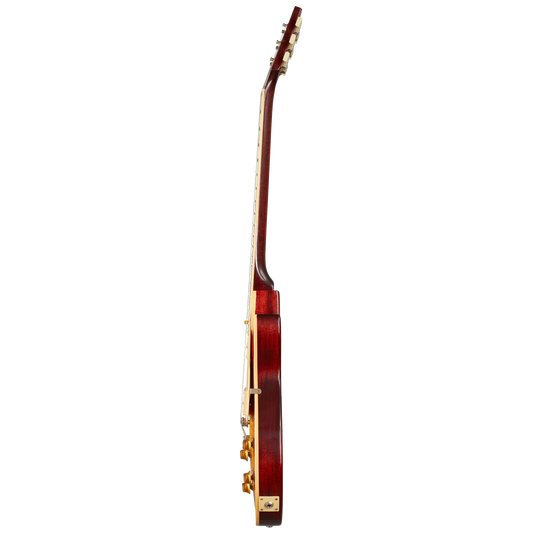
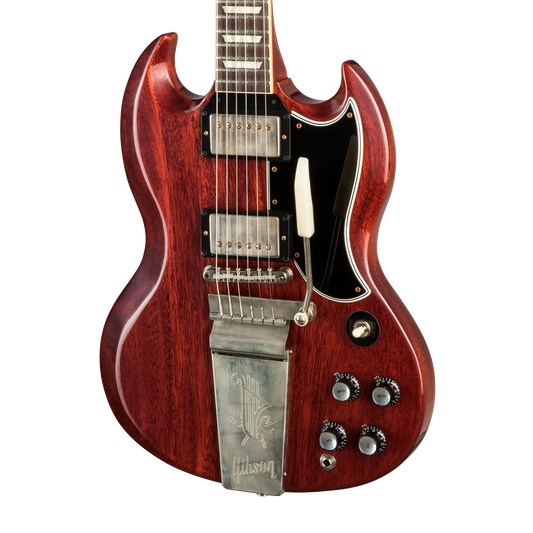
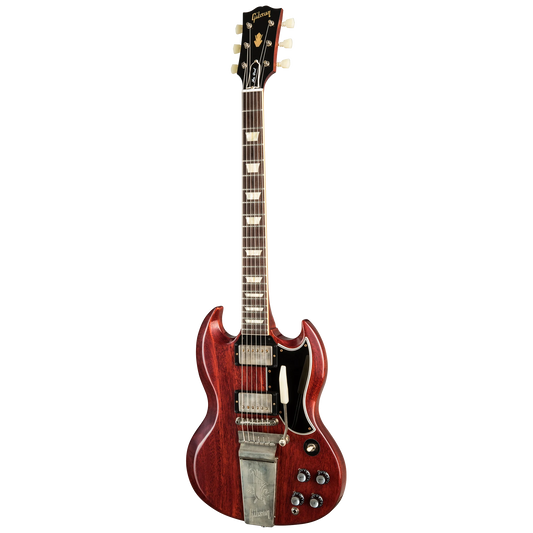
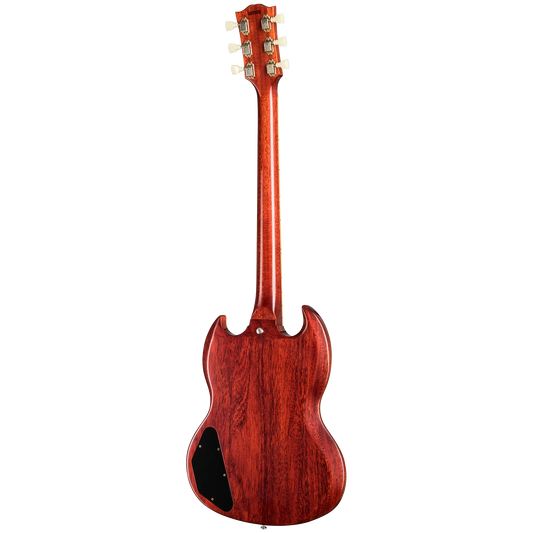
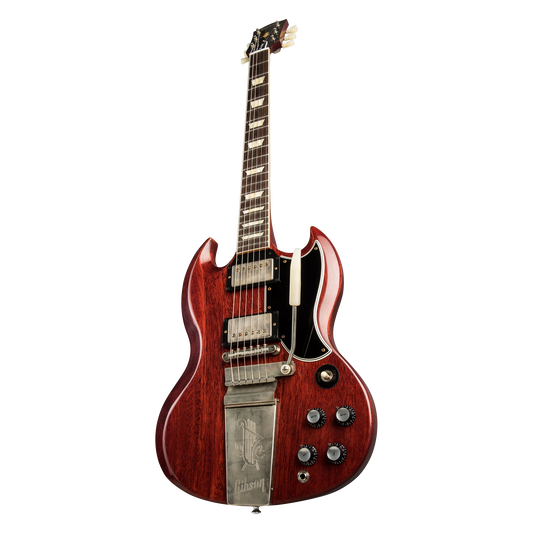
A Gibson SG sounds different from a Les Paul in part because of the wood recipe used for each model. An SG’s body and neck are both made from mahogany, while a Les Paul combines a mahogany neck and back with a carved maple top. That maple cap adds extra upper-midrange edge to the sound and the thicker body adds sustain. The shape, construction, hardware, and electronics also help give the SG and Les Paul their distinct tones and character.
Jim DeCola explains that the mahogany and maple combination was part of the original Les Paul design. “If Gibson was going to enter the solidbody market, they wanted this new guitar to impart those Gibson features and aesthetics,” he says. “With the carved top, they chose maple.”
Early Les Paul Goldtops hid that two-wood construction beneath their gold finish. According to Jim, Gibson did not want competitors to know that the guitar used a separate maple top and mahogany back. “The maple adds a certain brightness and midrange that the mahogany doesn’t,” Jim explains. “That marriage was just kind of magic.”
 Time-honored hand processes are a significant part of what makes a Gibson a Gibson
What’s the difference between rosewood and ebony fretboards in terms of sound and feel?
Ebony fretboards add a little more brightness and snap to the sound of an electric guitar, while rosewood is generally associated with a slightly warmer character. The difference can also come down to feel and appearance, with some players simply preferring one material over the other. “If you take a Les Paul Standard and make one with rosewood and one with ebony, you’ll find that the ebony fingerboard is going to add a little bit of brightness,” Jim explains.
We also see how carefully fretboard material is selected before it becomes part of a guitar. Gibson uses its own grading standards, which include selecting particularly dark ebony for the models that call for it. The raw wood is then shaped, radiused, inlaid, fretted, and conditioned to create the finished fingerboard.
The Les Paul Custom is a perfect example of how sound, feel, and appearance can all play a part. Its ebony fingerboard is part of the model’s distinctive “tuxedo” look and character, alongside the finish and gold hardware. “Sometimes it’s just the feel, and sometimes it’s the look,” Jim adds. “There’s no right or wrong.”
Why does Adam Jones prefer heavier Les Paul Custom guitars?
Weight is another characteristic that can strongly influence a player’s relationship with an instrument. Jim shares the story of working with Tool guitarist Adam Jones when Gibson developed instruments based on his 1979 Silverburst Les Paul Custom. Gibson guitars in general, and Les Paul Customs especially, tended to be heavier in the late 1970s, which is something that polarizes opinion among players. But for Jones, the physical and tonal weight became an essential part of the recipe.
“There’s an old saying that you like what you know,” Jim says. “Adam had this 1979 Les Paul Custom, and in that era they were a lot heavier. The joke for us is that we can’t make one heavy enough for him. He just loves them heavy. If he picks something up that’s too light, he probably won’t even plug it in. It just doesn’t feel substantial enough.”
Other players have exactly the opposite reaction and may immediately reject an instrument that feels too heavy. As usual with guitars, there’s no right or wrong—it comes down to the individual player and what feels familiar, comfortable, and inspiring to them.
 Sanding a neck destined for a Gibson Les Paul Custom, the tuxedo of electric solidbodies
How does weight relief work?
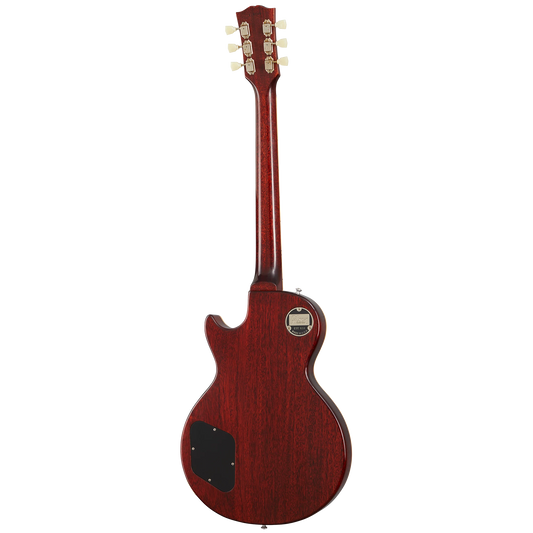
Weight relief allows Gibson to reduce the mass and weight of certain guitars to cater to player preferences, with modern players generally preferring lighter weight guitars. In the case of a Les Paul Standard, several weight-relief patterns remove material from strategic positions in the mahogany back before the maple top is attached. During the tour, Dustin shows Dinesh an example of nine-hole weight relief compared to a Historic-style Les Paul back with traditional, non-weight-relieved construction.
Jim explains that player expectations play an important role in determining which approach Gibson uses. Some guitarists prefer an instrument built as closely as possible to vintage specifications and demand a vintage-style fully solid body. Others appreciate a weight-relieved design, which is why Gibson offers multiple options to suit different player preferences.
That distinction can be seen across the current Les Paul lineup. Many Historic Reissue models follow the traditional 1950s recipe with no weight relief, while some Modern Collection models use weight-relieved construction. As with fretboard woods or tonewood combinations, there is no single approach that suits every guitarist and certainly no definitive right or wrong answer. “That’s why we make it all,” Jim says.
Shop Gibson electric guitars and read more about the tonewoods used on Gibson guitars.