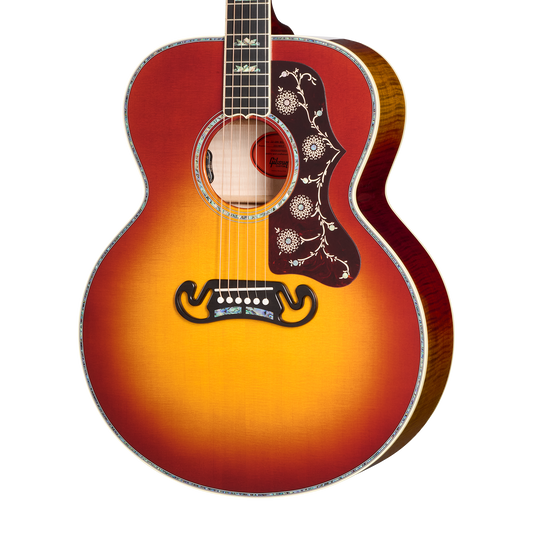
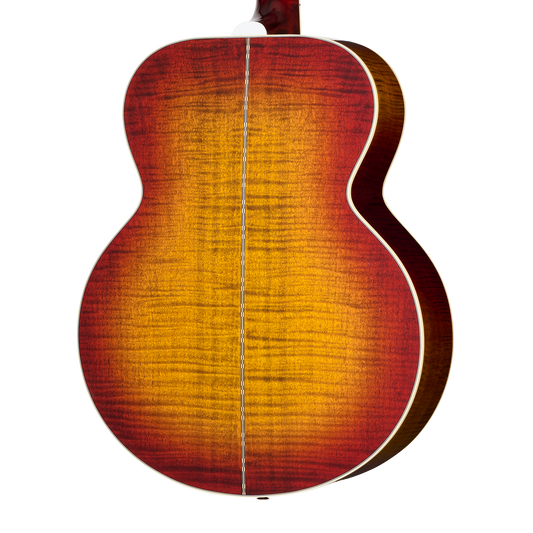
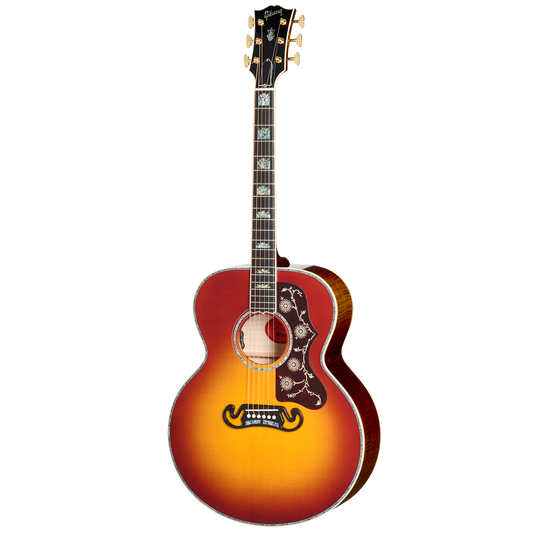
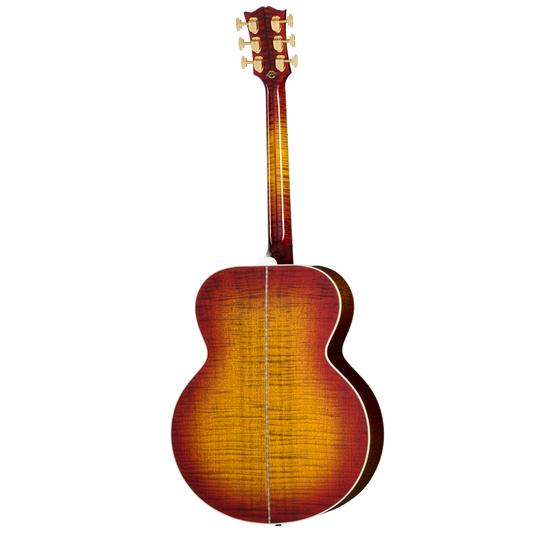
The Gibson Gear Guide heads to Bozeman, Montana, for an exclusive tour of the Gibson Acoustic craftory, celebrating 100 Years of Gibson flat-top guitars
To celebrate 100 years of Gibson flat-top acoustic guitars, the Gibson Gear Guide travels to Bozeman, Montana, for an exclusive look inside the Gibson Acoustic craftory. Host Dinesh Lekhraj explores iconic body shapes and historic build methods, and interviews some of the skilled craftspeople behind these legendary instruments. Along the way, he discovers why Bozeman became the home of Gibson acoustic guitar production and how the methods established there continue to shape the instruments built today.
A brief history of Gibson acoustic guitars and a craftory tour
Chapter one begins in Bozeman, Montana, the home of Gibson acoustic guitars, where we meet Robi Johns and Don Ruffatto for a brief history of Gibson acoustic guitar production and an all-access tour of the Gibson Acoustic Craftory floor. Robi Johns, Senior Product Development Manager at Gibson, explains why Gibson moved its acoustic guitar production to Bozeman and how production was reinvigorated there. “The climate is dry and very nice in the summertime,” Robi tells Dinesh. “It’s a wonderful place to be inspired, so they started building instruments here, particularly mandolins.”
In the 1980s, Gibson was focused on building handcrafted electric guitars in Nashville, Tennessee, leaving what Robi describes as a gap in the industry for fine acoustic instruments. Builders in Bozeman were producing mandolins at a small downtown workshop called the Flatiron Mandolin Factory. Gibson acquired Flatiron in the mid-1980s, creating a connection that ran deeper than convenience.
Gibson history began with mandolins and founding luthier Orville Gibson, who was “obsessed” with building a finer mandolin in the late 1800s. Orville Gibson believed that carving a mandolin from solid, arched wood left the cells of the wood where nature had placed them. “It’s kind of spiritual, it’s kinda mythical, and it’s somewhat scientific, and therefore you had a better sounding instrument,” Robi explains.
Ground was broken on the Bozeman facility in 1987, and the first guitars shipped in July 1989. The original building remains the main production floor today, where Don Ruffatto, Made to Measure Project Manager, walks Dinesh through the process as raw wood arrives and is sorted, cut, and sanded in preparation for guitar building at the Gibson Acoustic craftory. “In this area, we basically bring in the raw wood,” says Don. “We sort it, we cut it, we sand it. Get it ready to use, get it ready to build it into a guitar.”
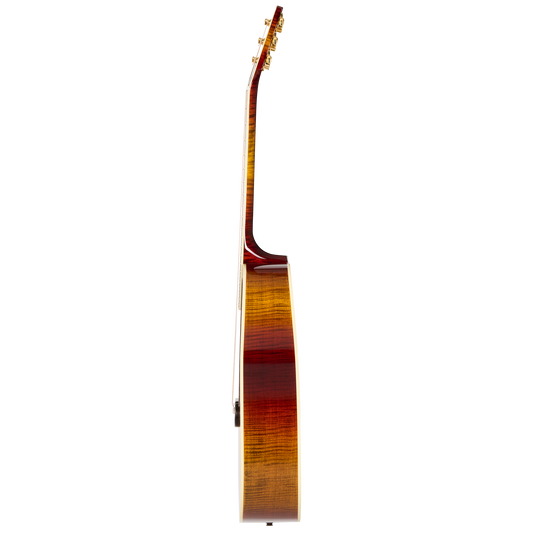
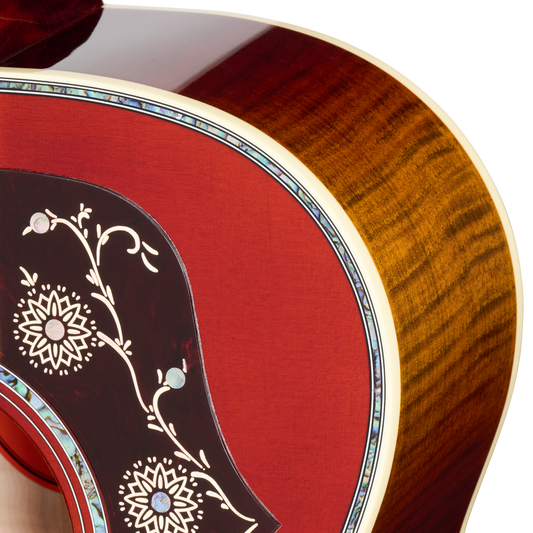
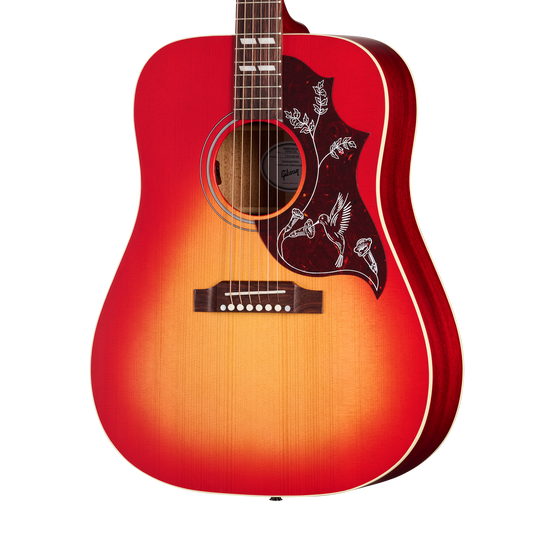
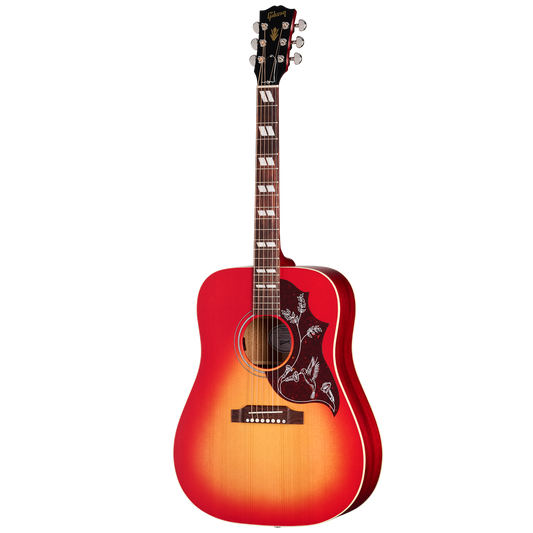
From there, Dinesh follows the build through the body department. Tops and backs are planed and inspected on a bright light table until no light passes through the seam. He then visits the rib-bending press area, where the sides of Gibson models including the SJ-200™, Hummingbird™, Dove™, J-45™, L-00, and more take shape.
 Guitar sides take shape in the rib-bending press area
Why are Gibson acoustic guitars built in Bozeman?
Acoustic guitars had proven difficult to build consistently in the humid climate of Nashville, Tennessee. Bozeman offered a different environment and greater control over the conditions required for the wood to acclimate. The controlled environment helps the team manage the wood throughout the construction process, from its arrival at the craftory through cutting, sanding, shaping, acclimation, and curing. “A craft room can be dehumidified much easier than humidified,” Don says. “We’re at about 40 percent, averaging 70 degrees Fahrenheit.”
Not the fastest way to build an acoustic guitar, but the right way
You’ll notice it yourself, but throughout the tour, Dinesh also points out that Gibson acoustic instruments aren’t being built in the fastest way possible. And that’s exactly the point. “We have 130-plus years of experience,” Don points out.
And Robi describes that approach as a defining part of Gibson history. “Everything we do is a part of history,” he explains. “They say, ‘Why do you do that type of guitar?’ Well, it was created for this style of music back in that time—the 1930s, 1940s, 1950s. You can go through every decade. And to do that, we still build it in an old-fashioned way that’s difficult.”
That thinking extends back to Orville Gibson and his obsession with how every part of an instrument’s construction contributes to its performance. “Orville Gibson had an obsession with how you put an instrument together,” Robi says. “If at all possible, every method that you connect the neck, every method that you put the bracing in, should enhance the performance.”
A hundred years of genre-defining Gibson flat-tops later, that mission and the pride in building your acoustic guitar have not changed. “People always try to find ways to make it better,” says Don. “But in so many cases it’s just the nature of what we do that is already right.”
Shop Gibson acoustic guitars and read more about the tonewoods used on Gibson guitars.