The Texas-native singer-songwriter and guitarist sits down with the Gibson Gazette to discuss guitars, new records, and modern Texan country music
The heart of Texas has seemingly always had something interesting going on, separate yet parallel to the Nashville mainstream of country music. The old days of Western swing, the 1970s heyday of outlaw country, and, over the past couple of decades, the maverick spirit of Texas independent country and roots music.
Texas native Wade Bowen has long been at the forefront of that last one. A revered singer-songwriter (and not just regionally), a venue-packing live act, and a friend and collaborator to many in the genre he’s helped define. And his Gibson acoustics have been along for much of the ride, including the making of his latest album, The Version of Me You Get. Despite being his newest release, it wasn’t his most recent recording: it was originally laid down in 2020, in the wake of personal struggles including the loss of a beloved family member and vocal-health issues that threatened to derail his career.
Worldwide issues related to the COVID-19 pandemic made recording tricky and touring in support of a new release impractical. Bowen moved on to newer, brighter material as things slowly returned to normal. But in 2026, with vocal strength long since regained and touring as hard as ever, Bowen is finally releasing the project and gearing up for a special-edition re-release of his seminal 2006 album Lost Hotel, which solidified him as one of the leading lights of the modern independent country music scene. Bowen joined us to talk guitars, new records, and a bit of a crash course for the uninitiated in modern Texas country music and his prominent role in it.
Among other things, we’re here to celebrate the release of your new album The Version of Me You Get. But there’s more to it than just being your newest collection of songs; tell us a little about where this record came from. I understand it wasn’t coming from the easiest place.
“Yeah, I recorded this in 2020, and just kind of put it on the shelf for a while. I’d had a rough year back in 2018 and was trying to find a way to write about all of it… it’s not all about the bad things, just everything I was feeling in life. And when I finally revisited the album last year, thinking about finally putting it out, it was like listening to a whole different artist… kind of crazy. I think it’s something different, just even more raw and real, honest and vulnerable. Hopefully that’ll be what people love most about it. But at the time, I was tired of talking about that year; I think almost everybody was. And I didn’t want this to just be a COVID record; I thought it was bigger and better than that. I thought the emotions were bigger than that.”
You and Sean McConnell have been collaborators for a long time, but he’s got even more presence than usual on Version . Producer, co-writer on much of the material, tell us a little about Sean for the uninitiated.
“Oh yeah, one of my best friends in the world. Godfather to one of my boys, he’s as good as it gets. And this record kind of came out of him just saying Hey, why don’t you come up here to my studio? Let’s just hole up and see what happens. No plans, really; we just wrote a song and recorded it, pieced it together with [Sean playing] one instrument after another and building things track by track. Literally from the first word up. Hadn’t done a record like that before, at that time, and haven’t done one since. Sean is just that good, that talented, and plays almost every instrument. It was COVID times, so we didn’t have the luxury of jamming with a band in there. But it was just great to get in the studio with someone who’s that intelligent a songwriter and such a great friend as well. He’d produced my Christmas record too, produced my gospel record, we’d worked together before, of course, just not quite like this.”
Plus, there’s a new collaboration for you, with roots music legend Dan Tyminski on Weight on the Levee. How did that come about?
“That came through Sean as well. Sean and Dan wrote that song. Sean was playing me some of the stuff he’d been writing, old and new, and I just fell in love with Weight on the Levee and thought it could show a side I hadn’t gotten to show very much. Originally Dan was just going to come in and do harmonies, but that voice… we were like, Wow, how about we just do a duet? Dan’s a legend, an amazing singer, songwriter, player, everything. Sometimes all you’ve got to do is ask, and sometimes they say yes! We wanted it to be big, bluesy, sort of an apocalyptic feel. They pulled it out of me… we’re opening our shows with it now; it’s a monster of a song. I’m so glad they let me cut it.”
And you’ve put out two studio albums since this one was put on hold; there were 2022’s Somewhere Between the Secret and the Truth and 2024’s Flyin. Pretty productive half-decade for you here… what distinguishes Version from those two, from where you stand?
“I keep going back to the words raw and vulnerable. It’s got some sides I don’t think I’ve shown before, lyrically. And sonically, Sean, I think, really went bare-bones in a good way with it. It’s got some balls and some depth to it; it just feels really real to me. Two guys making music for the right reason… writing everything in the moment, instead of having everything prepared before we hit the studio. That’s something I’ve never really done before. I don’t think I’d want to make every record that way, but it’s fun to have one like that. Really proud of it.”
Going even further back… we’re approaching the 20th anniversary of Lost Hotel, which was a breakthrough record for you at the time. Tell us a bit about this upcoming re-release.
“I knew the 20th year was coming up; it was a really critical record for me and my career, kind of a launching pad in my opinion. So, I was looking around; I went and dug through this old hard drive I had, and found a bunch of bonus tracks. And I knew why they didn’t make the record, but I didn’t care that much; I wanted people to hear and feel them, to hear how this record took me three years to make. An independent record, back in the early days of me being broke and having to piece together money here and there, cut a few, and then you’re broke again—time to save up. So now it’s like opening up a time capsule… I didn’t touch the vocals; some of these are just scratch vocals I sang live, and we added the band later, but I’m fine with people hearing that in it. So, it’s like this thirty-song anniversary project where I want people to go on a journey with me on it. Go back twenty years, take that trip down memory lane if you’re a fan of what we’ve been doing.”
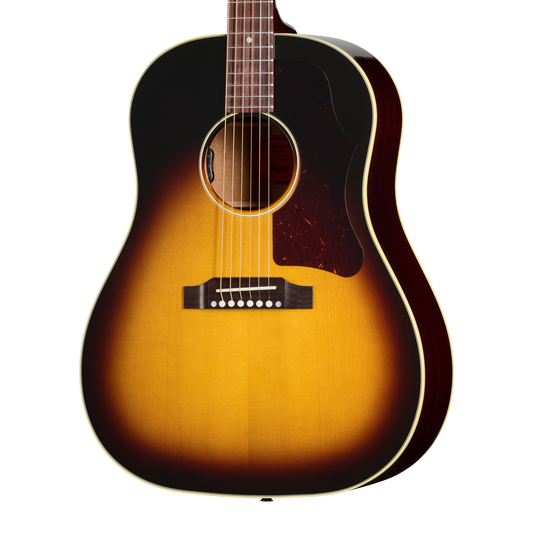
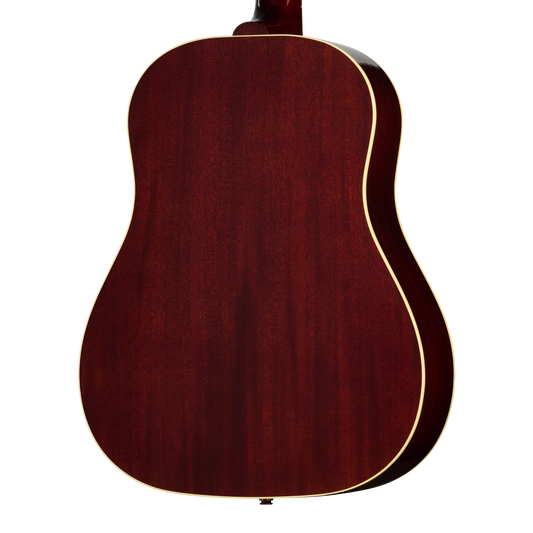
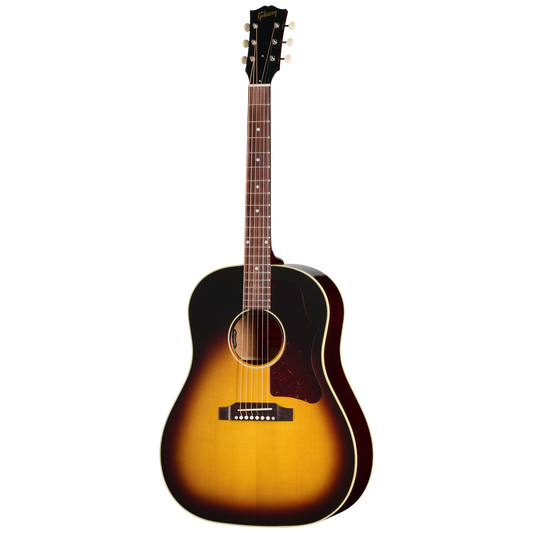
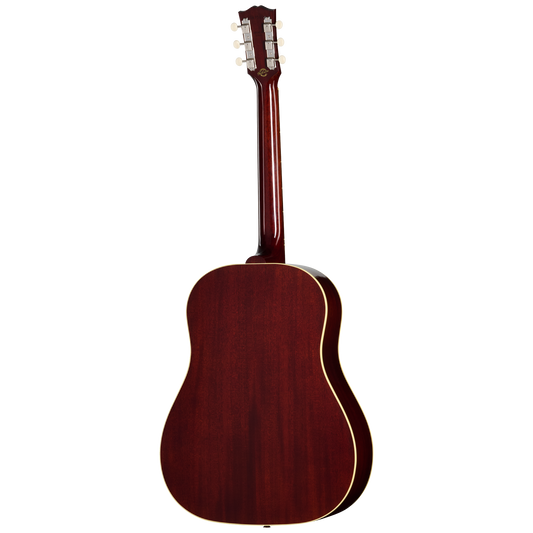
 Wade Bowen with his Gibson J-45
Lost Hotel wasn’t your first record, but as a breakthrough, what set it apart from the work you’d put out before?
“It was the first record I really made solo. I’d had a band prior to that, West 84, but this was the first record of doing it my way. And it had taken me a while to come into my own as a songwriter; I think [Lost Hotel] really did it for me, challenged me, and it took a long time. Working on it for three years, you live and learn. I pushed myself and found something in there. Found the guy who wants to do it, who’s figuring out how to do it, and I think it established me as a songwriter and really set the tone for the rest of my career.”
How do you put together a set list for the live shows at this point, with such a deep well of material to draw from?
“Ha ha, funny you asked… Been quite a challenge to figure that out, but we’re doing it. I believe in this record a lot, The Version of Me You Get, so we’ve got quite a bit of that in the show right now. I think for me it’s versatility, not a negative but a positive thing, having a lot of stuff to pull from. Eleven records, plus all the live stuff and the Hold My Beer records with Randy Rogers. It’s a career I’m really proud of; I just try to go out every night and somehow give a summary of it all. And the more new records you have, the more you have to pull from. It’s tough, but I shouldn’t complain; it’s a great problem to have.”
Once upon a time, the Texas music scene seemed more like an explicit rebuke of what was going on in the Nashville mainstream, but it seems like that’s largely given way to collaboration and much friendlier vibes. What’s your take on that?
“I think both sides have really given way to each other. I think it was a battle for a lot of us starting out in Texas and this region to help people understand music from Texas could be universal. I don’t think drawing a line in the sand, like some people did twenty years ago, was a good thing to have. I love Nashville, and I think it’s a huge bonus for a lot of us to know all the talent and great people in that town. And I think a lot of Nashville would say the same. It’s just artists willing to accept each other; I think the camaraderie is happening because they’re both getting ahead. You’re seeing it with people like Parker McCollum, Koe Wetzel, and Cody Johnson; you’re seeing how the artists in the landscape of it all can get along and support each other.”
And given your from-the-inside perspective on the last few decades of Texas-based country music, what else do you think has changed the most?
“I see more artists really caring about the lyrics, about the songs, about a universal sound that can be appealing to everybody. Even the up-and-comers seem to have this great work ethic; they really care about the craft of songwriting, the craft of their lyrics. You’re seeing with Flatland Cavalry, Turnpike Troubadours, Cody Canada getting stuff ready for a new Ragweed record … whether it’s older guys or younger guys, there’s such a great tradition of the craft of songwriting and more and more people are understanding that and pushing themselves.”
Who were some of the people you really looked up to when you were getting started back in the late 90s?
“Well, I’ve always loved Ray Wylie Hubbard. He’s always been so kind to me and such a great dude. And leaning on each other, you know… Randy Rogers and I, really leaning on each other as buddies. Cross Canadian Ragweed, we were leaning on each other quite a bit. Pat [Green] and Jack [Ingram], they were a little bit before me, but I leaned on them too. That camaraderie got us through a lot.”
And to add on, are there any newer artists you’re particularly excited about?
“Yeah, I love this kid named Colton Mortensen; he’s phenomenal. I love William Beckman. He’s not new anymore, but I still want to say that name; he’s as talented as anyone out there. Ashton Naylor, he’s got some new stuff coming out that’s gonna be phenomenal. That’s a good place to start.”
Your Gibson acoustics have been a pretty consistent part of your show and your sound for most of the ride, so I’d like to ask you to name three things for us: Your current go-to, your longtime sentimental favorite, and your dream guitar.
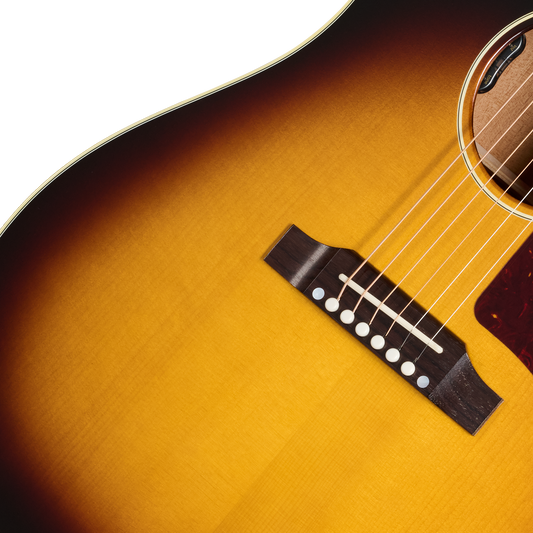
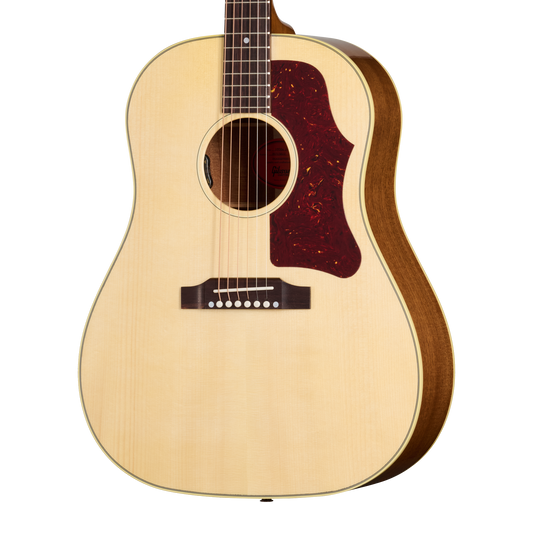
“I’ve always leaned on the J-45. I just love the stability of those things. Out on the road, throw them around, bang them around; they always still look the best and sound the best. I play them every night; I’ve got a whole bunch of favorites. Especially my J-45™ with the Fireburst finish—it’s beautiful and plays great.
“My favorite I’ve ever had was an older J-45. I played it all over the road and then took it off for a while, keeping it safe. But I took it into the studio with me with my late friend Keith Gattis when we were making Solid Ground. I actually just took it up there to write. I don’t always do a whole lot of guitar playing in the studio depending on the record, but Keith loved it so much that he played it on the entire record, which felt like a huge honor for me and that guitar. For an artist and producer like that to want it for the entire project. That guitar just feels like home.
“When it comes to a dream guitar, I really love those new Cobra Burst finishes, and what can I say—I like it best on a J-45. I know what I like, ha ha. Any color!”
And as essential as a great guitar is, there’s so much more that goes into being a long-haul career musician. What bit of advice would you give some other young artist – Texan or otherwise – on making it happen for themselves?
“I just try to preach patience. I think everybody in this day and age wants everything to happen so fast, and I see it with a lot of young artists. You’ve really got to practice patience; everybody finds success on their own terms and their own way, and it happens at different speeds. You can’t look left or right; you just gotta keep your head straight forward and be patient, and trust in what you’re doing. If you do that, it seems to happen in its own time. Not always easy to accept, but for some people it takes 15 years, and for some people it takes six months. So I just try to preach patience as much as possible, and settle on the fact you’re not gonna give up. No matter what happens.”
Visit the official Wade Bowen website for more.