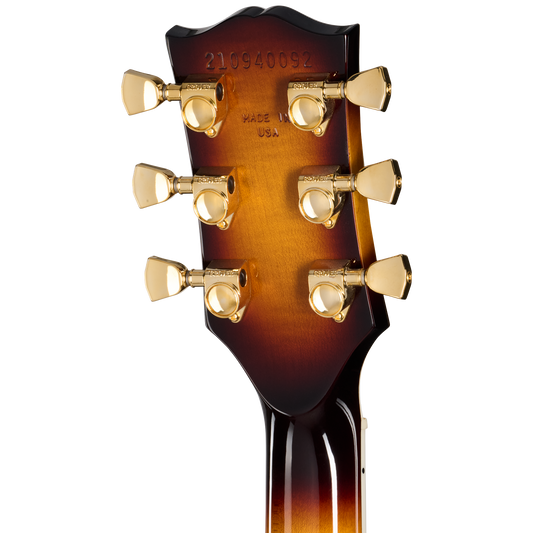
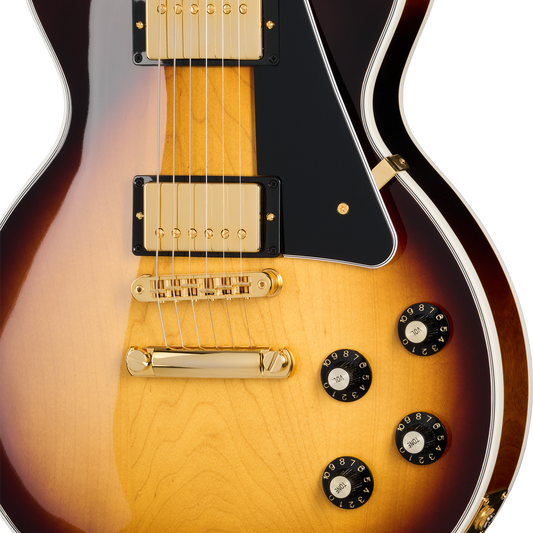
Gibson electric guitar models explained—how to buy your first Gibson electric guitar
Buying your first Gibson electric guitar is a pretty big deal. You’re not just buying “some guitar,” you’re both investing in a handcrafted piece of music gear that’ll outlive you, and you’re tapping into a legacy that’s been shaping the sound of music for generations. When you pick up a Gibson guitar, you become part of a musical family. But which Gibson electric guitar is best for you? What’s the difference between all the different Gibson electric guitar models, and which one should you buy? I’m here to help. I’ve played all of these and own most of them, so I can confidently tell you which model is likely to be the best fit for your playing style.
Gibson has a whole bunch of iconic designs and tones that will blow your mind. With solidbody and semi-hollow electric guitars galore, each has its own unique feel, sound, and character. But here I’ve kept it super simple with a beginner’s guide and rundown of the core models in the Gibson electric guitar lineup.
We also have a handy video in which Gibson Gear Guide host Dinesh Lekhraj explains the differences between the main Gibson electric guitar models, too. I’ve put the timestamps below so you can skip straight to each model in the accompanying video.
Chapters:
0:00 Are you a Gibson guitar player?
0:41 Three things you need to look for when buying a Gibson
0:54 The look
1:20 The sound. Humbucker or single-coil pickups?
2:24 The controls on your guitar.
3:28 Scale length
5:15 Are you a Gibson Les Paul Player? 50s vs 60s Les Paul neck profiles
9:15 Are you a Gibson SG player?
12:15 Are you a Gibson ES-335 player?
13:25 Are you a Gibson Flying V player?
14:47 Are you a Gibson Explorer player?
16:26 Are you a P-90 player?
18:22 Are you a Gibson Firebird player?
20:53 A/B shootout between Gibson Original and Modern Collection, Gibson Custom Historic, Modern Collection, Murphy Lab, Made to Measure and Epiphone models
What are the main Gibson electric guitar models?
The main Gibson electric guitar models are the Les Paul™, SG™, ES-335™, Flying V™, Explorer™, Firebird™, Victory, and Theodore™. The Les Paul delivers sustain and warmth; the SG is lightweight with easy playability; the ES-335 offers semi-hollow versatility; and the others stand out with bold shapes and wild stage presence.
The Les Paul is the flagship Gibson single-cutaway solidbody guitar, with an unmatched level of sustain and warmth. The SG, on the other hand, is lighter and faster, with a thinner body and double cutaways for easy upper-fret access. The ES-335 is the classic Gibson semi-hollow guitar and probably the most versatile electric guitar of all time, covering everything from sixties jangle to warm blues lead and heavy riff-rock. And then there’s the Flying V, Explorer, Firebird, Victory, and Theodore—five bold shapes that look pretty wild and deliver some standout tones and undeniable stage presence. Each of these designs has its own unique feel and sound, so there’s a Gibson electric guitar for everyone.
 Gibson Les Paul Standard 50s Plain Top in Tobacco Burst
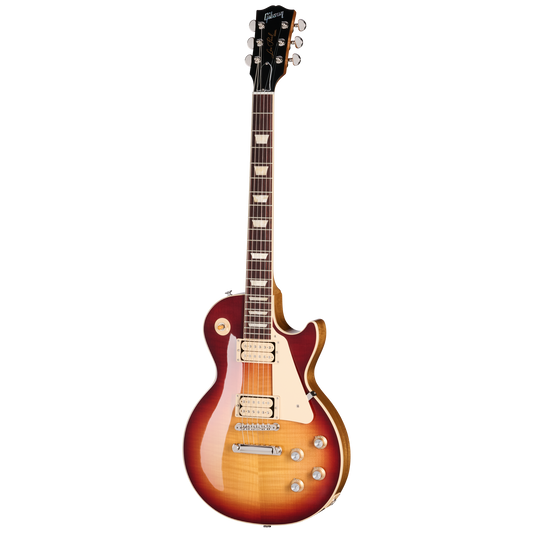
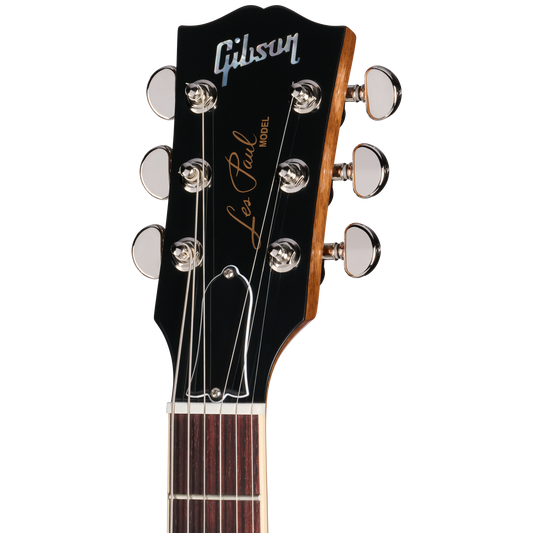
The Gibson Les Paul
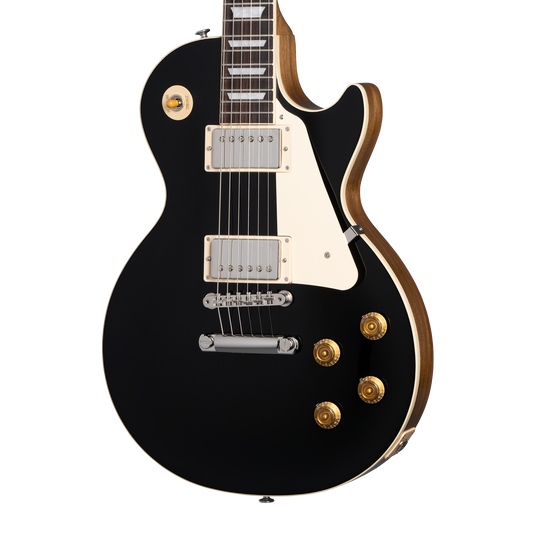
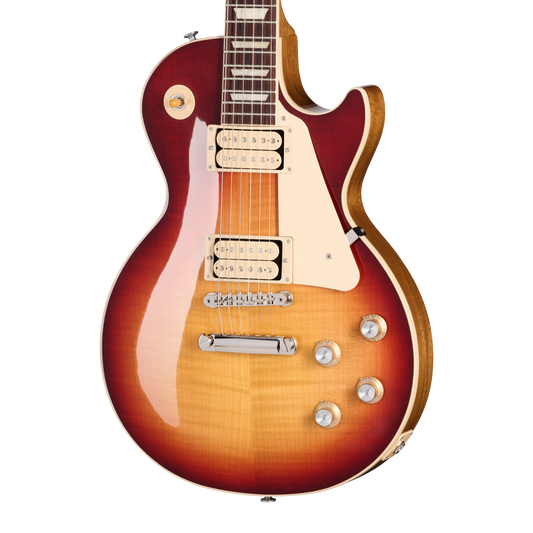
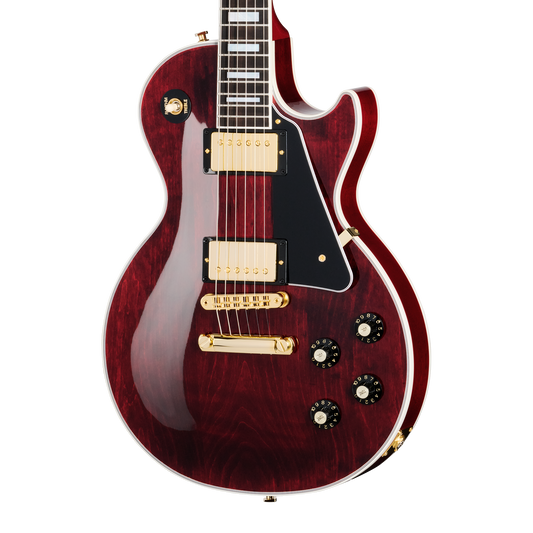
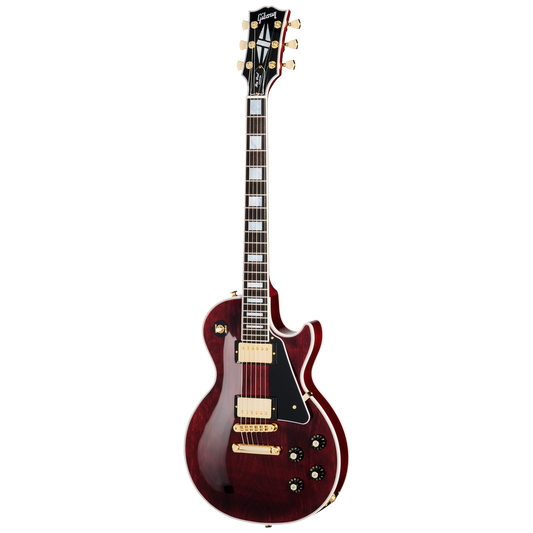
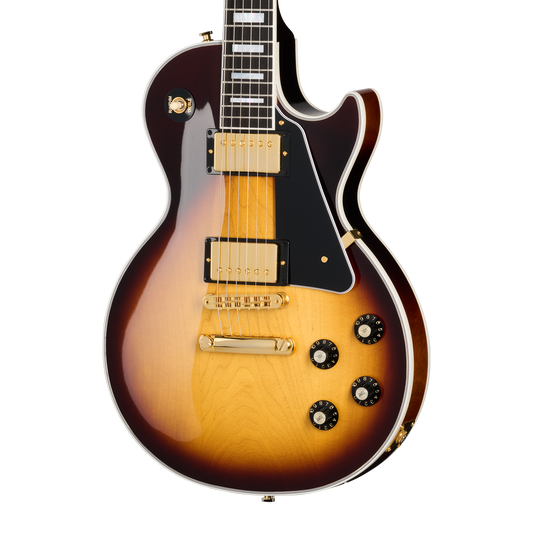
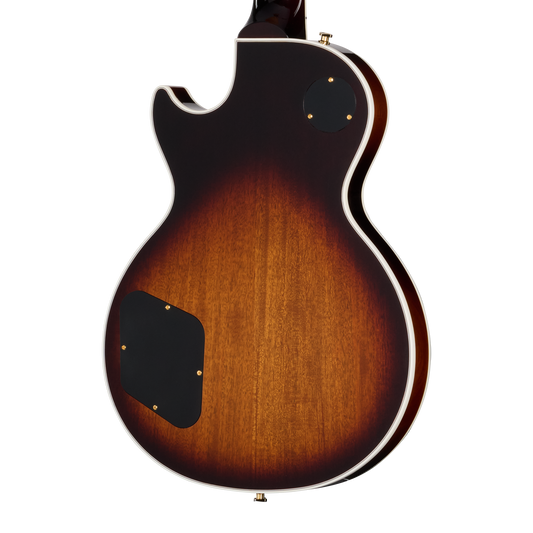
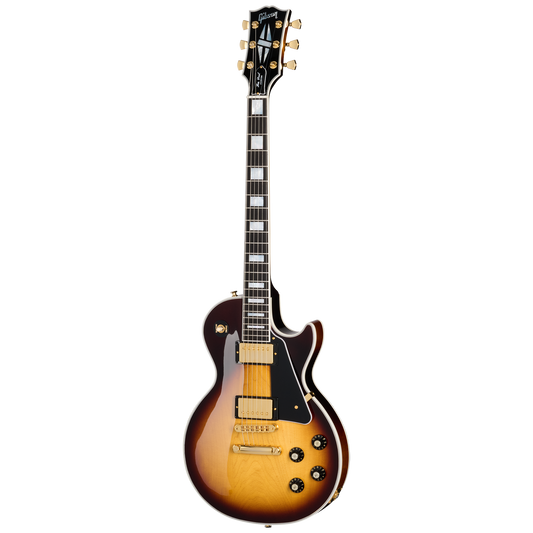
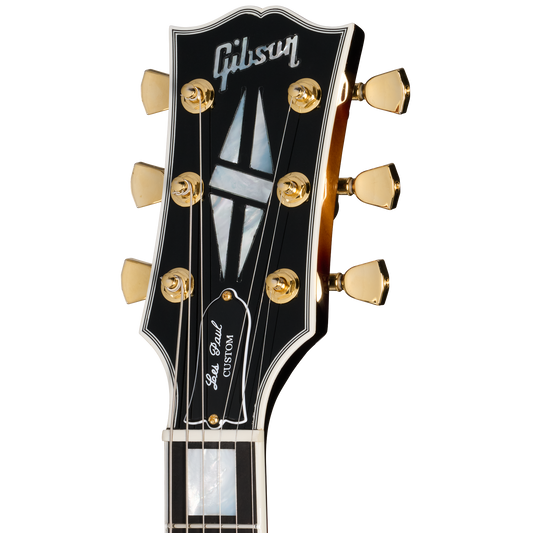
The Les Paul Standard is hands-down the undisputed champion and most iconic model in the Gibson lineup of electric guitars, and for a lot of people, it’s the most desirable electric guitar of all time. I’ve written a list of Gibson Les Paul guitars and their differences in another article, but for now, I’ll focus on the Gibson Les Paul Standard.
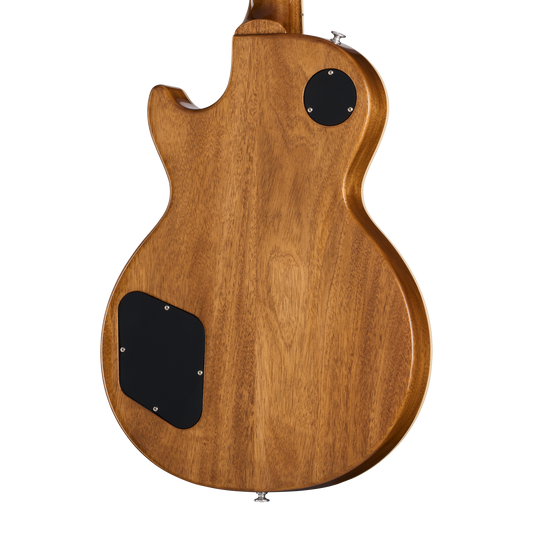
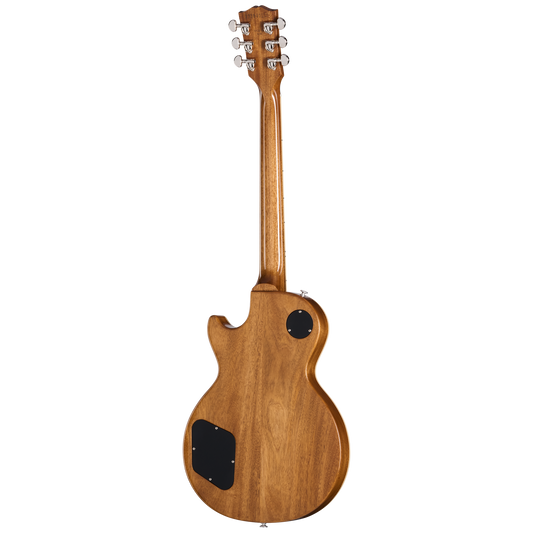
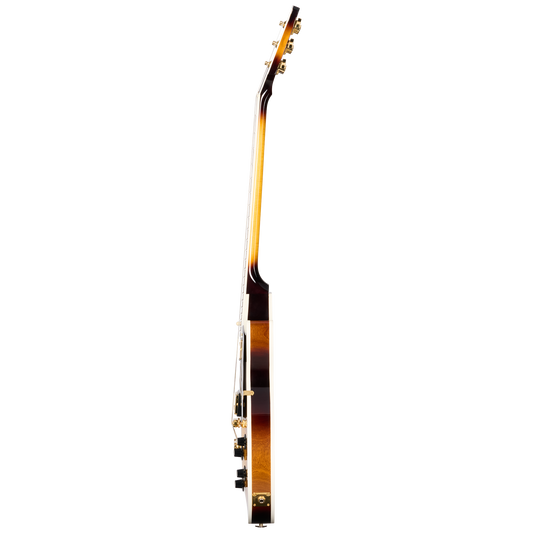
Introduced back in 1952, the Les Paul has had a massive impact on the sound of modern music. There’s literally no genre of music this model can’t do. Think blues, jazz, pop, hard rock, metal, and everything in between. The Les Paul Standard has been a staple for generations of guitarists and continues to be a go-to for the next generation of players. You have a carved maple top, solid mahogany body, set-neck construction, and dual humbucking pickups. From Jimmy Page and Slash to Noel Gallagher and Johnny Marr, the Les Paul Standard is a huge part of the sound of all these guitar legends and so many more like them.
Today, as part of the Gibson Original Collection, the Les Paul Standard comes in two key flavors. The Standard 50s model has a thicker 50s Vintage neck profile, Burstbucker™ 1 and 2 pickups with Alnico 2 magnets, and no weight relief, making it perfect for players who want to get that authentic vintage feel combined with warmth and bite. The Standard 60s model gives you a SlimTaper™ neck, 60s Burstbucker pickups with Alnico 5 magnets, and a slightly brighter tonal profile that’ll cut through the mix with a little more presence, still with the non-weight-relieved body.
Both guitars beautifully recreate the experience of playing a Golden Era Les Paul. Whether you go for the palm-filling neck profile and tonal girth of a 50s Les Paul, or the faster neck and slightly brighter voice of the 60s version, the Standard remains the purest expression of the Gibson Les Paul. When it comes to choosing the best Gibson guitar shape for you, you might want to look at this model first, as you get that classic tone, that sustain that only the Les Paul is capable of, and the unmistakable, iconic look of a single-cutaway Gibson.
 The Gibson SG Standard in Ebony
The Gibson SG
When it comes to great Gibson solidbodies, the Les Paul is rivalled by one guitar in particular: the Gibson SG. The SG burst onto the scene in 1961 as a bold reimagining of Les Paul’s signature model with a slimmed down, mahogany-only body, and a new double cutaway configuration with a neck join that allowed easy access to the topmost frets. Since then, it’s become one of the most recognisable and best-selling Gibson electric guitars of all time. It’s also seen as the “alternative” to the Gibson Les Paul and has been favored by legendary heavy metal and hard rock guitarists—Tony Iommi and Angus Young, I’m looking at you.
I’ve gone over the differences between the various SG models in another article, including the SG Standard, SG Junior, and others in the lineup. But if you’re choosing your first SG, the Gibson SG Standard should be where you start. Why? Because the SG Standard has a classic configuration with its mahogany body, dual humbuckers (490R and 490T), Rounded neck profile, and big “batwing” pickguard. It is an absolute workhorse of a guitar and lighter on the shoulder than a Les Paul Standard, too. If you want to get a bit closer to the original early 60s design, the SG Standard ’61 delivers vintage vibes with its SlimTaper neck, smaller pickguard, and 60s Burstbucker pickups, which deliver an airier and more vintage-style tonality.
If you want the most iconic SG design of them all, the Gibson Custom 1964 SG Standard Reissue is the guitar for you. The 1964 model was famously played by George Harrison during The Beatles’ creative peak and by Eric Clapton in Cream, with his iconic handpainted “Fool” SG. The Gibson Custom version features handwired electronics, Alnico 3 Custombuckers, a Maestro™ Vibrola™, and period-correct specs, delivering the look, feel, and tone of a vintage example.
With its unmissable silhouette, the Gibson SG is as iconic today as it was in 1961. Over the decades It has been used by countless blues, indie, rock, and metal musicians, including such diverse artists as Sister Rosetta Tharpe, Robby Kreiger of The Doors, Thom Yorke from Radiohead, Angus Young of AC/DC, Tony Iommi of Black Sabbath, Derek Trucks, Jake Kiszka from Greta Van Fleet, Fatoumata Diawara… the list just goes on and on. Its light weight and easy playability make the SG especially popular with players with smaller frames.
 Gibson ES-335 in Sixties Cherry
The Gibson ES-335
The ES-335 has been a staple of the Gibson lineup since 1958 and is widely regarded as the most versatile electric guitar of all time. It’s a guitar that combines the depth, air, and resonance of a hollowbody with the sustain and feedback resistance of a solidbody, delivering the best of both worlds. You can safely take this guitar to any jazz, blues, soul, indie, pop, funk, or classic rock session—or if you’re like Pepper Keenan of Corrosion of Conformity and Down, any Southern rock or metal session. There is literally no genre the ES-335 cannot do.
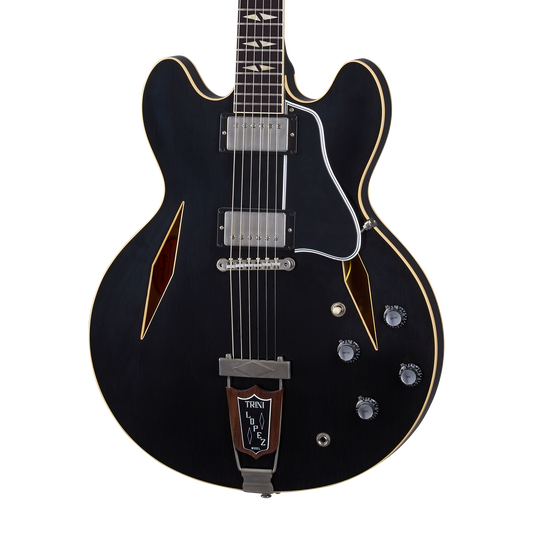
While Gibson also produces some pretty fancy and historically significant variants like the ES-345, ES-355, and the Trini Lopez Standard, I’ll just highlight the classic ES-335 model, which is the most widely played and recognised version. The current core Gibson ES-335 has a three-ply maple/poplar/maple body with a maple centerblock, which helps cut out unwanted feedback while still delivering plenty of sustain. A mahogany neck with a Rounded C profile gives you all-day playing comfort, along with a rosewood fingerboard and dot inlays. In addition to other differences, the ES-345 has split parallelogram inlays and the ES-355 has block inlays, so that’s one way you can easily tell them apart. In terms of sound, the calibrated T-Type humbuckers deliver a vintage-voiced tone with a contemporary edge—dynamic and balanced yet bright and articulate across all three pickup selector settings—while the handwired electronics with Orange Drop® capacitors offer silky-smooth tone shaping.
No matter what genre of music you play, whether you’re fronting a band or the lead or rhythm guitarist, the ES-335 responds to your playing with nuance, sustain, and character that’s just unmistakable, and you can hear the difference thanks to the semi-hollowbody design. More than sixty years on, the ES-335 continues to be one of the most desirable and versatile electric guitars ever made. It’s the perfect choice if you want a guitar that’s a little bit lighter on the shoulder, balances superbly on a strap, delivers a tone that’s harmonically rich and dynamic, and is just a solid workhorse of a guitar for every genre.
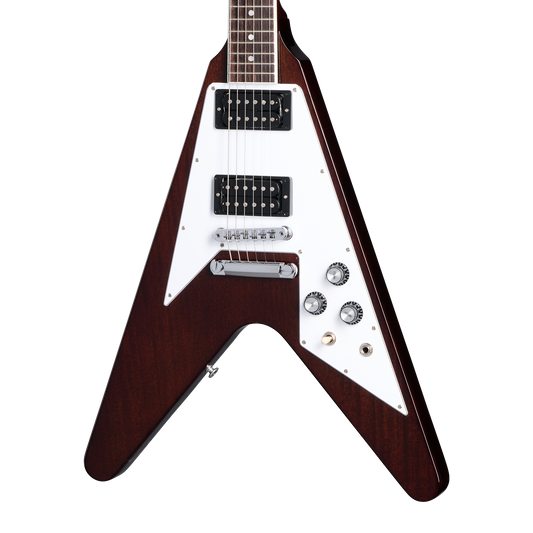
 Gibson Flying V 70s in Dark Walnut
The Gibson Flying V
The Gibson Flying V is one of the most iconic shapes in the world of electric guitars. While it first came out back in 1958, the Flying V found a new lease of life in the 70s and then exploded in popularity in the 80s, especially with hard rock and metal players. Today’s lineup includes two standout models inspired by those eras. The Gibson Flying V 70s features a bound rosewood fingerboard, a SlimTaper mahogany neck, and a pair of uncovered 70s Tribute humbuckers, handwired with Orange Drop capacitors for a classic arena-ready tone.
In contrast, the Flying V 80s is based on the sleek 1980s design, with a similar all-mahogany build and SlimTaper neck, but this time loaded with 80s Tribute pickups that give you a fatter voice and even more sustain. Both guitars offer powerful humbucker tone and fast playability, but it’s the era-specific voicing and visual attitude that make the difference—whether you’re chasing the raw punch of 70s rock or the gain-heavy tones of 80s metal, you have a choice to make. Do you want classic 70s tones? Or do you like the sound of 80s hair metal? And for the authentic late 1950s korina Flying V experience? Head to Gibson Custom.
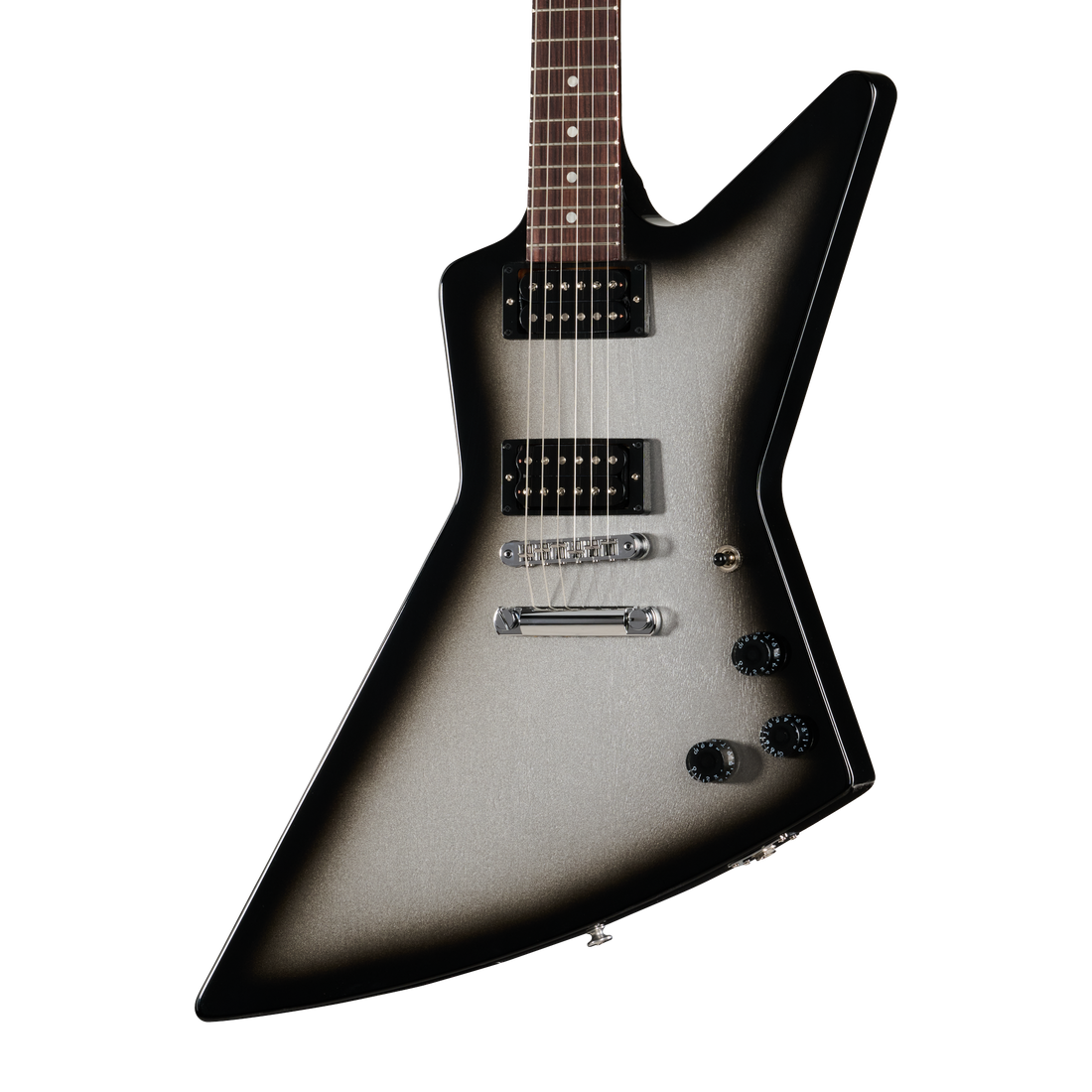 The Gibson Explorer 80s in Silverburst
The Gibson Explorer
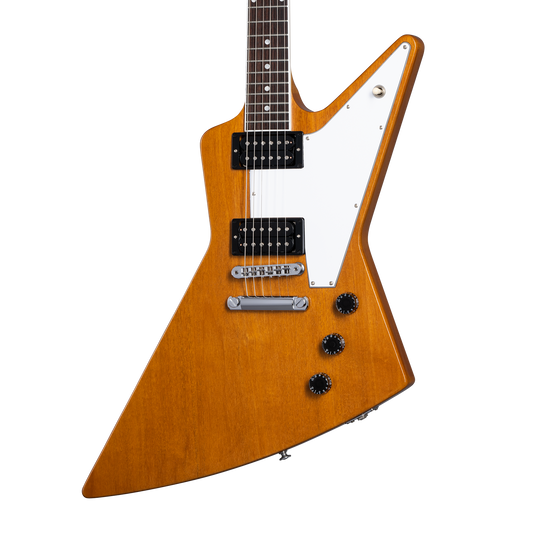
A guitar that looked like it came straight out of the future back in 1958 ended up being the sound of hard rock and metal in the 1980s, but there is much more to the Explorer than that. It was also used to reshape the sound of mainstream rock music in the hands of The Edge on U2’s first three records and in the 2000s, to define radio rock all over again by Dave Keuning from The Killers.
Again, outside of Gibson Custom, you have two main choices here: the 70s and 80s versions of the Gibson Explorer. The Explorer 70s takes us back to the look and sound of the rock icons of that decade, complete with a mahogany body and neck, a bound rosewood fretboard, and those black Speed knobs. They also come with 70s Tribute humbuckers, handwired with Orange Drop capacitors.
The Explorer 80s, on the other hand, takes the 1984 model as inspiration and leans into high-gain territory. You have the same mahogany build and SlimTaper neck, but with 80s Tribute pickups that deliver a fat tone, rich sustain, and a tighter voice that’s perfect for the harder-edged sounds of the era—think Metallica and James Hetfield. Both models are great for any genre, but they have two distinct voices: one rooted in classic rock and even indie, the other is designed to recreate the thrash metal intensity of the 80s, especially when paired with a MESA/Boogie® amp.
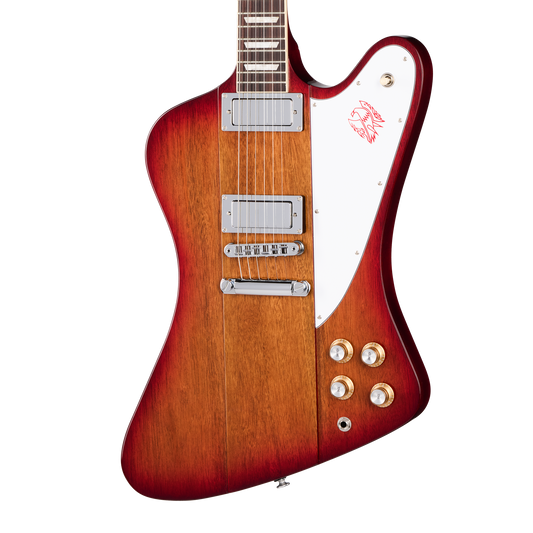
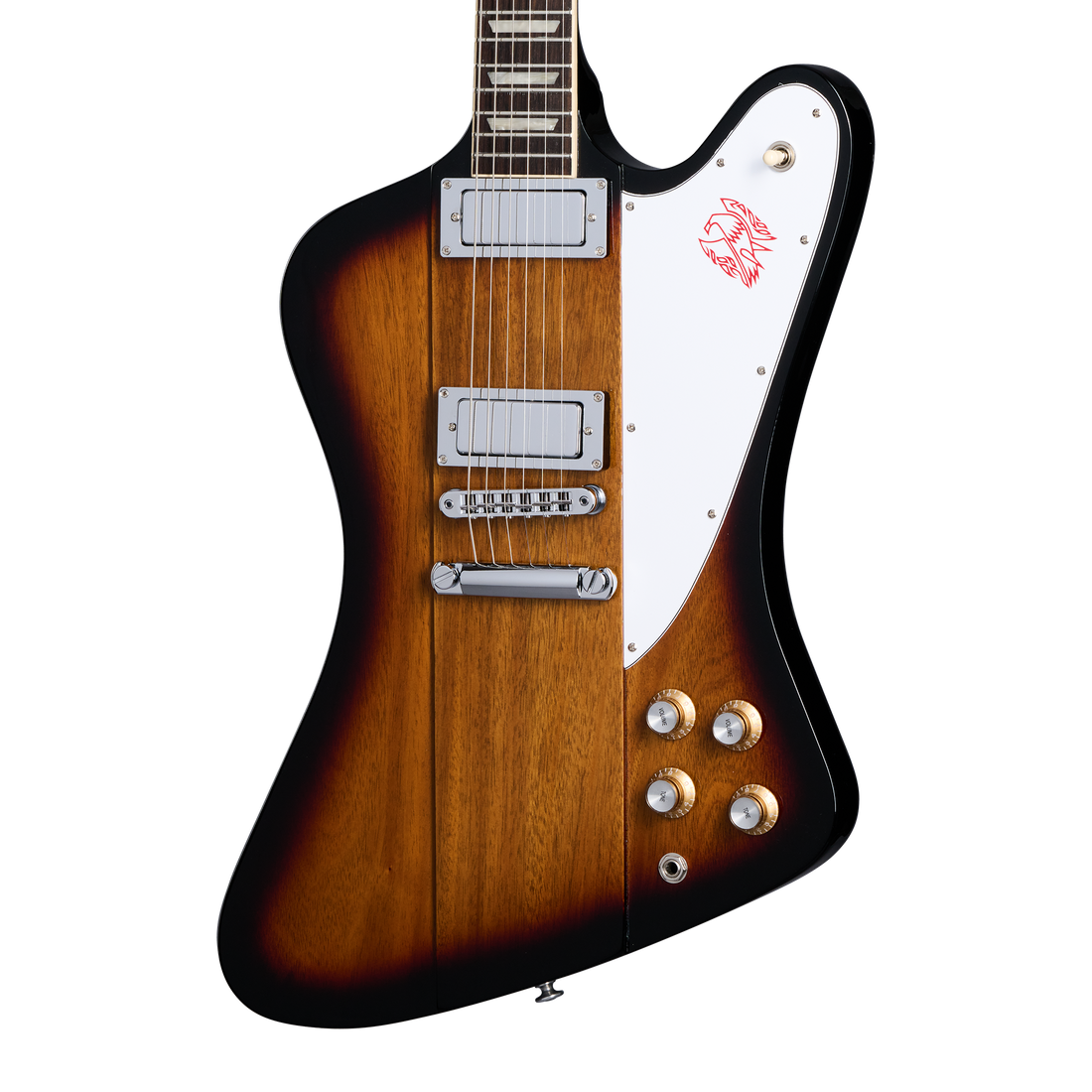 The Gibson Firebird Platypus in Tobacco Sunburst
The Gibson Firebird
The Gibson Firebird is unlike any other guitar in the lineup. Since its debut in 1963, the Firebird’s reverse body shape—created by automobile designer Ray Dietrich—Firebird humbucking pickups, and neck-through design have made it a favorite among guitarists who want a guitar that really stands out, both sonically and onstage. And it’s not just about the looks. Keith Richards used the Firebird during the 1965 (I Can’t Get No) Satisfaction sessions in the RCA studios and created one of the most iconic guitar riffs of all time using a Maestro fuzz. Thanks to its edgier, spankier tone, and when cranked through a distortion pedal, a Firebird cuts through like nothing else.
Today, there are two main interpretations in the Gibson core lineup: the Firebird Platypus and the Gibson Custom 1963 Firebird V. The Firebird Platypus pays tribute to a rare transitional 1965 model, featuring a Non-Reverse headstock—flattened like the bill of a platypus, hence the nickname—and six-in-line tuners instead of the classic banjo-style setup. While it keeps the look of a neck-through body, it features a set SlimTaper mahogany neck, rosewood fretboard with trapezoid inlays, and historically voiced Firebird humbuckers that deliver everything from bell-like cleans to biting rock tones.
In contrast, the Gibson Custom 1963 Firebird V is a meticulously crafted recreation of the original, built with vintage-accurate neck-through construction, a nine-ply mahogany/walnut neck, and mahogany body wings. It is available with a VOS finish or with Murphy Lab Ultra Light, Light, and Heavy Aging. All four Gibson Custom versions feature period-correct hardware and handwired electronics for a true Golden Era playing experience. The Alnico 5 Firebird pickups provide clarity, power, and that unmistakable Firebird chime that can sing sweetly or breathe fire with a little added distortion from your amp or pedal. The clue is in the name, I guess.
If you’re after something unapologetically different—both in feel and in sound—the Gibson Firebird is your best bet. I’m a Firebird player and I find that the best sound comes from experimenting with switching pickups for clean tones and distortion, as you get sweeter, warmer tones on the neck but still plenty of bite, and then the real cut from the bridge when you kick in that distortion pedal. Enjoy!
 Gibson Victory Figured Top in Smokehouse Burst
The Gibson Victory
The Gibson Victory returned in 2024 as part of the Gibson core lineup. This was originally an underground favorite back in the 1980s and has been reimagined for the modern player who desires a bit of everything in terms of tonal flexibility and reliability. With an Explorer headstock, 25.5-inch scale length, 24 frets, and advanced coil-splitting electronics, this guitar is ideal for genre-hopping guitarists and session musicians.
There are two versions of the Victory: the Victory Figured Top is pretty eye-catching as you’d expect, with a figured maple cap on top of a mahogany body, all finished in high-gloss nitrocellulose lacquer for a top-notch look. Meanwhile, the Victory does the same but with a solid mahogany body and a more subtle satin nitrocellulose lacquer finish. Both versions come with the same 80s Tribute humbuckers, a SlimTaper mahogany neck with an ebony fretboard, and a compound fretboard radius for ease of play. Whether you like the high-end look of a gloss finish over figured maple or the raw, good looks of a satin-finished mahogany body, the Victory looks great on stage, no matter which option you choose.
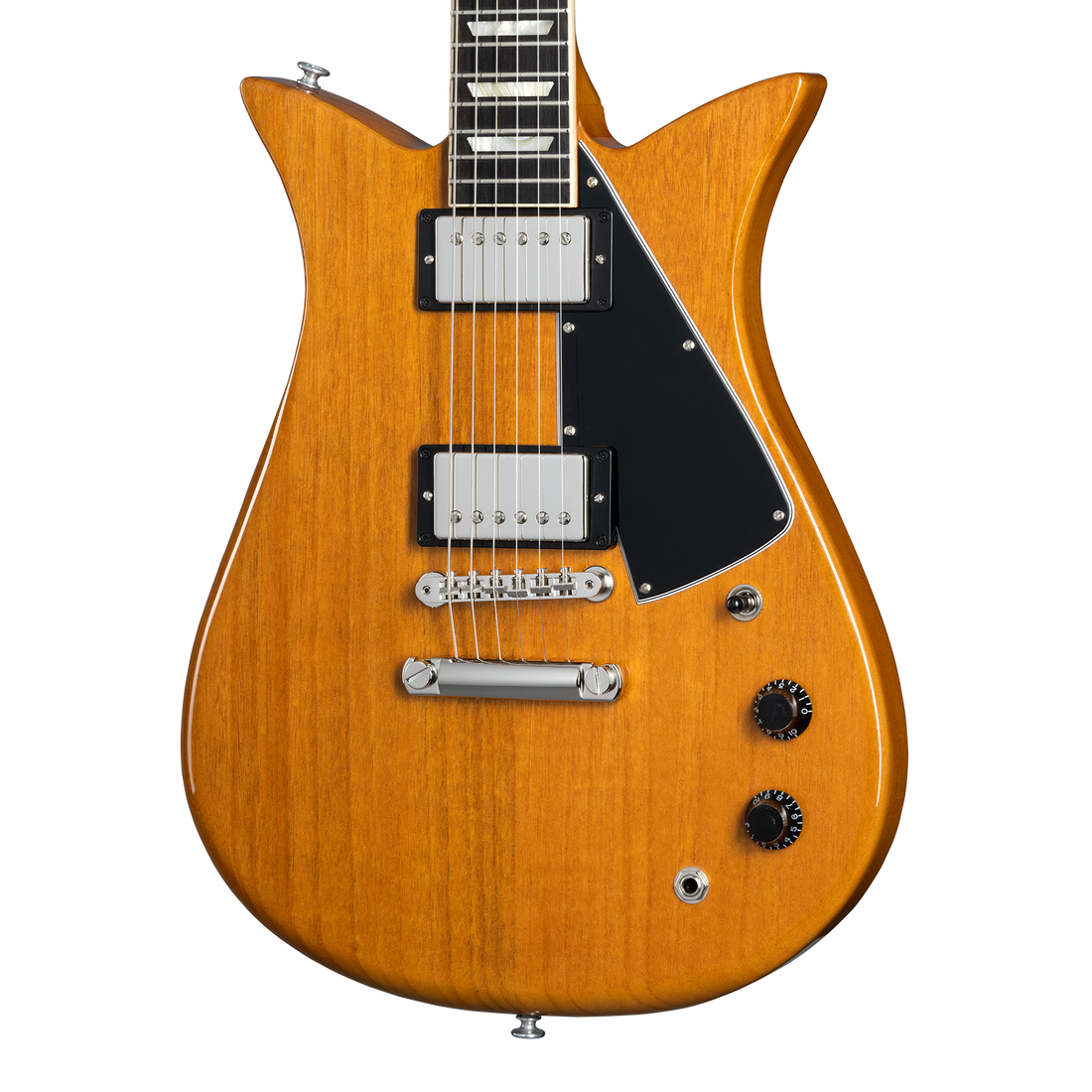 Gibson Theodore Standard in Antique Natural
Gibson Theodore
The Gibson Theodore is a design based on a 1957 sketch which, after years in the archives, came back to life as part of the Gibson core lineup. This is one of the most distinctive and comfy guitars Gibson has ever made, with its sleek design, a double Florentine cutaway, and an offset scimitar headstock. It has a solid mahogany body and a SlimTaper mahogany neck with a rosewood fretboard for smooth, fast playing. The ’57 Classic and ’57 Classic Plus humbuckers deliver rich, vintage tones that cover anything from warm blues to hard rock. The Theodore is a guitar loaded with heritage and a fascinating history, as well as a very cool silhouette. The Theodore is a bold choice that can handle any genre from shoegaze to rock, metal, and indie. In case you missed it, there’s a pattern here with Gibson guitars and versatility. There’s something for everyone here.
Which Gibson electric guitar is right for you?
As I always say, there’s no right or wrong answer here. Finding your next (or first) Gibson electric guitar is a little bit about the look, a little bit about the sound, and a little bit about the feel. This applies whether you want the classic silhouette and sustain of a Les Paul Standard, a piece of the SG’s rock legacy, the versatility of the ES-335, the futuristic looks and powerful tones of the Flying V, Explorer, and Firebird, or the head-turning style and playability of the Victory and Theodore. Every Gibson electric guitar is comfortable in a wide range of musical contexts, so get out there and play them, choose your favorite, and you’ll have a musical companion for life, handcrafted in Nashville, Tennessee.
Shop Gibson electric guitars today. Click through if you want to know the differences between the Gibson Les Paul versus the Gibson SG and read our complete comparison and guide.