How songs born in a New York apartment on an old nylon-string guitar light up arenas around the world
Hot on the heels of their eighth studio album, This Mirror Weighs a Ton, we meet Interpol frontman Paul Banks and guitarist Daniel Kessler at the Gibson Garage London at the end of a long press day. When the New York band first arrived on the global scene in 2002, their icy, interwoven guitar lines and sharp-dressed aesthetic gave indie-rock a new vocabulary and spawned a thousand imitators. Over the years, their guitars of choice—predominantly Epiphone Casinos™ for Daniel and Les Paul™ Customs for Paul—have remained fairly constant, and the interplay between their playing styles is still key to the band’s signature sound. However, they aren’t immune to having their heads turned by new toys—Paul especially, who is a guitar pedal addict who has recently been seduced by the considerable rock ’n’ roll charms of his Gibson Flying V™.
This Mirror Weighs a Ton was written and recorded in New York and Berlin, and while it was a case of trying not to screw with a successful formula, a few notable twists kept things fresh. “It’s always been the same,” says Paul. “Daniel brings in basically a song written on one instrument, the guitar or piano. In very limited instances we tweak that structure a little bit, but for the most part then it’s open season for bass, drums, secondary guitar and vocals to be layered onto it. This time, as every other time, that was the case.
“Since we lost our original bassist Carlos [Dengler] after album four, I was playing bass on albums five, six, and seven, but this time it felt like it was time to pass on those duties to our live bassist, Brad [Truax]. So he came in and wrote the songs with us and wrote the basslines and actually did some singing on the record as well. Then we worked with Andrew Wyatt, our friend, to produce. I think those two elements gave it a new energetic injection, and some new blood in the chemistry of the band that really paid off.”
Heading into the studio for the eighth time, we imagine some lessons have been learned along the way. “I think experience really helps in writing and recording,” says Daniel. “It also helps when you know it doesn’t feel right. But on this record it felt really all positive; it was really fun writing with Brad, nothing felt laborious, and we wrote a lot in a very short period of time, which is always a very positive sign. Our communal filter is very strong! But as you gain more experience I think you get better at it.”
 Daniel Kessler (far left) and Paul Banks (center) with their Interpol bandmates
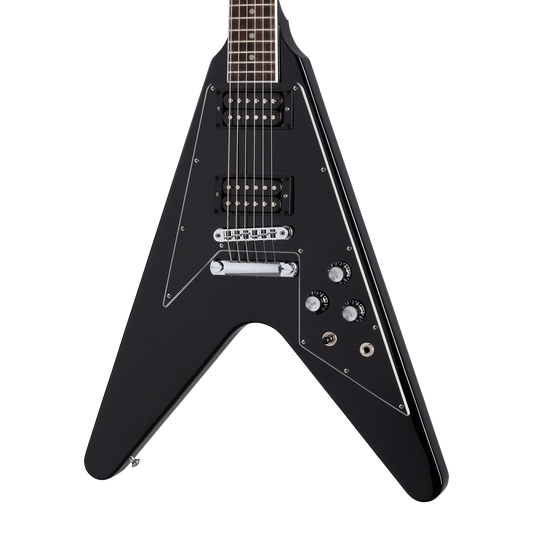
Out of necessity, Paul leaned heavily on an Ebony Gibson Flying V from the early 2000s, bringing another new dimension to the sessions. “When we were in the writing phase, we were in a rehearsal space a few blocks from my apartment in the East Village. The only guitar I had in my apartment that was working and in tune was my Flying V, that I hadn’t used in ages. Normally I have it around because I love how it looks, but I took it to the space and it was an incredibly fun guitar to play.
“I think it has a very unique sound—it’s just great for riffs and it has this sort of round, slightly more condensed and less woody and aerated tone than my Les Paul. I think it informed a lot of the parts I wrote on numerous songs on this record. The instrument you use can really affect the writing and in this case it was a Flying V. And that’s why I’m now using it live, to sort of honor the fact that we were all so stoked with what I was doing with it.”
We wonder if a guitar that makes such a strong visual statement puts Paul in a different mindset when he straps it on. “I see a little smile on his face when he puts it on,” laughs Daniel, who relied on his tried-and-true Epiphone Casino for the entire record. Earlier in the process, however, he introduced into the equation a different instrument from the Gibson family.
“We started with this very spontaneous two-week writing session in August of 2024,” he says. “We were between tours so I didn’t have access to the Casino, and I ended up borrowing Matt Sweeney’s ES-335™, which was a really fun guitar. Obviously it looks like a Casino or ES-330™, but it’s very different-sounding because of the center block and the humbuckers. Single coils are definitely my home. But it’s a great guitar and he’s an amazing guitarist. Not something that I’m used to, in a sense, but it was cool to explore.”
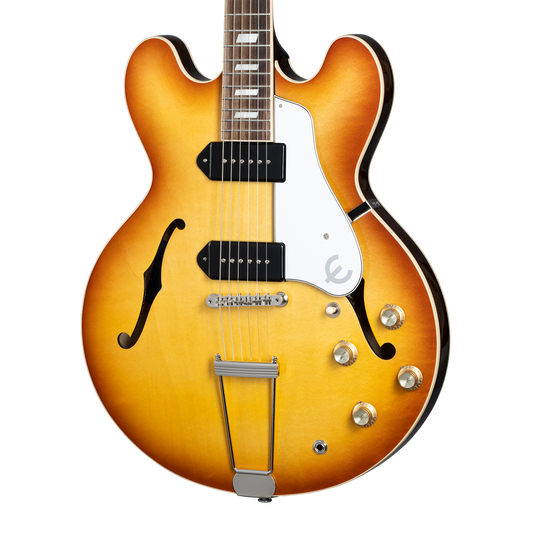
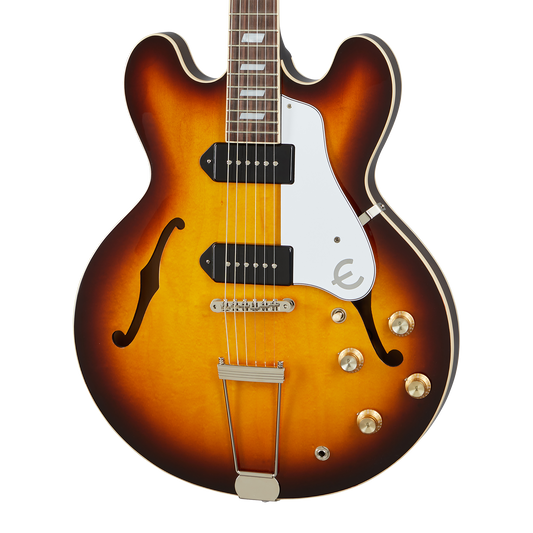
When it comes to Casinos, Daniel typically plays vintage models, but in the past has been unlucky with them on the road. “Two of them got stolen,” he says, ruefully. “The one I recorded the whole of the first record with got stolen in Vancouver, and the second one got stolen in South America somewhere. I don’t know where, it never made it back to New York. It’s weird—you fall literally in love with them. I’m less explorative than I guess Paul is. I don’t buy a thousand guitars, you get hitched to these guitars and it’s like, ‘This is the sound I’ve been kind of looking for my whole life. This is it.’
“Paul’s Flying V is pretty sick but I feel like the contrast between the Les Paul and the Casino is a really great balance. An SG is something I’d like to mess around with but at the same time I love my Casino. The current one is a ’67 or ’68 with a Bigsby. I have a 330 too, which is a ’68. Tonally there’s something that really fits. Paul’s really good at broadening his sound, at finding new pedals and ways of expressing things. I feel like I need to do more of that but sometimes it feels daunting—I don’t know where to begin!”
On the subject of that balance between the component parts and the way Paul and Daniel’s guitars interlock, we wonder how that interrelationship was architected in the early days of the band—or indeed if it was architected at all and whether it just came naturally. “Carlos had some real insight in the early days with a lot of that stuff,” says Paul. “Some key parts like my guitar in ‘PDA’—Carlos wrote what my guitar’s doing in that song. And I think that really economical and harmonically anchored approach to things set up some of the interplay that we did. But I think it’s also just sonically what works to us.
“So much of our music is about fitting into the frequency spectrum in the right way, so that it’s not redundant, it doesn’t feel too brown or too heavy or too bright. Like, if he’s really shimmery and I get really shimmery it better fuckin’ be a very nice complement, because if not it’s just going to be ugly. So I think it’s part of being a musician that you need to find a way for things to interlock.
“Daniel often writes things that are so minimal it’s like, well I could do something big that’s gonna swallow this thing he’s doing, or I could be sparse to let that speak and let the bass anchor it. It’s always this moving puzzle and you have to figure out what’s tasteful. A lot of that interplay is knowing that you need to add something but not adding too much.”
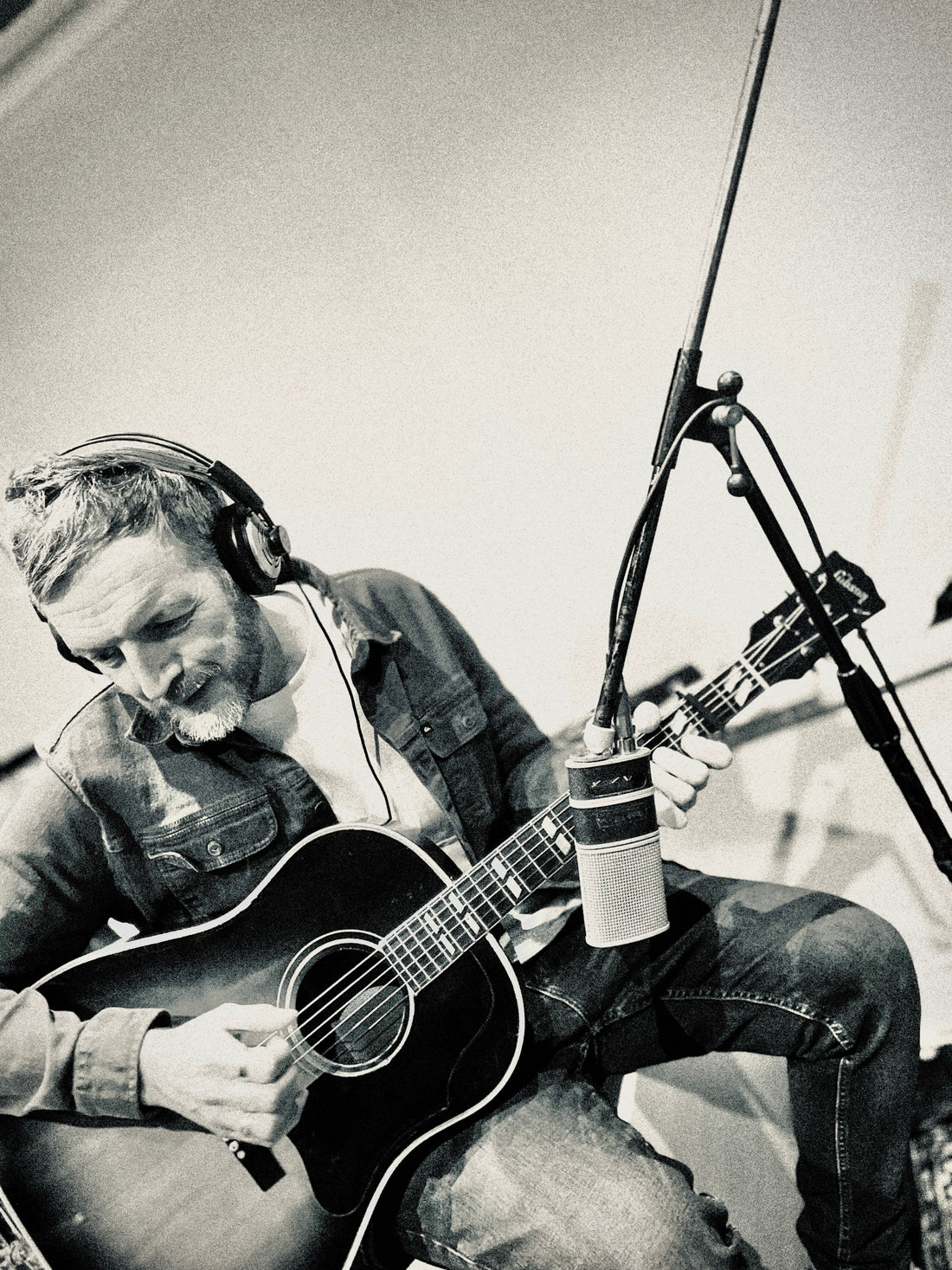
Despite the widescreen scale of their ethereal textures and driving rhythms, many Interpol songs began life in much more intimate fashion on the nylon-string guitar Daniel has owned since he was a teenager. “I write on an old classical guitar in New York,” he says. “It’s a guitar I got when I was 14 years old. It’s beat up, it doesn’t sound good, but it’s familiar and comfortable. If I can get something that sounds good to me on that thing, something I like, then usually it’s a good barometer for me.
“Emotionally I can connect to it—not coming from a sentimentality standpoint, but there’s something about that instrument I connect with versus like a steel-string acoustic. There’s something emotional about classical guitars and nylon strings, I think. Fingerpicking away at it is very intimate. I like doing that and it’s less of an act of commitment. It’s almost like sneaking up on your brain.”
Material from This Mirror Weighs a Ton began making its way into the brains of their audiences in early 2026, and several of the new songs are now staples in the setlist. “You have to be bold and confident in your new material,” Paul affirms. “But we’ve also been really fortunate—I can’t ever remember a time where we’ve unveiled a song and we didn’t really like the audience reaction. The songs on this record in particular are going over great.”
Interpol’s eighth studio album This Mirror Weighs a Ton is streaming now, everywhere. Their European tour kicks off in Berlin on November 11, with North American dates beginning December 9 in Chicago. Visit the band’s official website for tour dates and ticket information.